
I don’t often play the lawyer in my blog. The blog is about faith and a journey toward truth. Despite my own inclinations to avoid politics, I find myself sucked into what is going on because of the unprecedented nature of the changes that have occurred so quickly since Donald Trump took office. As a result, I am reading more articles on the daily political drama that is currently unfolding than I normally would.
In some ways, Donald Trump is simply expanding executive authority as previous presidents have done (especially recent ones), though he is expanding it further and faster than it was done before. The expansion of executive authority is nothing new, but he is pushing the envelope more quicky and more expansively than ever before.
In other ways, Trump is going where no previous presidents have dared to go. He is blurring the lines of his executive authority and constitutional constraints in ways and with a boldness we have not previosuly witnessed.
The Executive Branch of government has no constitutional authority to make law. A president only has power to carry out the law established by Congress (with certain defined exceptions). Executive actions that go beyond or are contrary to the laws established by Congress and the few constitutional grants of power can be questioned in the courts.
Donald Trump’s order to end birthright citizenship is an example of his executive actions over the last two months. The Supreme Court recently agreed to take up the cases filed in several states in which injunctions were issued against that birthright order. I get weary of the moral and political fray, so I am going to take a step back today and do a little analysis of the mechanics of what is going on.
Birthright citizenship is in the US Constitution. It wasn’t always there. It was introduced in the 14th Amendment that was ratified after the Civil War, and it provides that “all persons born or naturalized in the United States, and subject to the jurisdiction thereof” are citizens.
I should point out that the 14th Amendment was a dramatic change to the laws of our country. It changed the very foundation of our law – the Constitution. It was done through the mechanisms embedded in the Constitution, though. It wasn’t a maverick move by one man in power; it was done by the constitutional amendment process that requires passage by two-thirds of both houses or a constitutional convention called by two-thirds of the states, and it must be ratified (approved) by three-fourths of the state legislatures.
This is an onerous process, but it is meant to be difficult. The fear of the founders of our country was that one small segment of power or one man could change everything – as in the European monarchies from which the settlers of our country came. They built into the fabric of our governing structure a separation of powers, a federal government and many state governments, and processes that create a system of checks and balances – like the process to amend our Constitution. These things were done to mitigate against the fear of sudden change that might destabilize the democratic republic.
The 14th Amendment was passed in 1868. It took about three years after the end of the Civil War to get it passed, and that was moving through the process quickly. The bedrock of the 14th Amendment is at issue in the cases that are currently being taken up, now, by the US Supreme Court. The opening lines are as follows:
“All persons born or naturalized in the United States, and subject to the jurisdiction thereof, are citizens of the United States and of the State wherein they reside. No state shall make or enforce any law which shall abridge the privileges or immunities of citizens of the United States; nor shall any state deprive any person of life, liberty, or property, without due process of law; nor deny to any person within its jurisdiction the equal protection of the laws.”
14th Amendment, Section 1

Citizenship to all people born in the United Stated is the foundation of the 14th Amendment. From this foundation, the Amendment grants due process and equal protection, which are arguably the most significant protections that Americans enjoy.
The application and scope of the 14th Amendment was challenged 30 years later in a case that made its way up to the US Supreme Court from the 9th Circuit in California. (See United States v. Wong Kim Ark, 169 U.S. 649 (1898)) At issue was a 21-year-old Chinese man who was born to Chinese citizens who lived in San Francisco when he was born in 1873.
The Chinese Exclusion Acts passed in 1882, prohibiting Chinese laborers from entering the US, making Chinese immigrants ineligible for citizenship. It also required Chinese people who left the country to obtain citizenship before re-entering the country.
Wong Kim Ark parents returned to China with him in 1890 when he was 17. He retuned briefly in 1894, and returned to the US again – the country of his birth – in 1895. Upon returning a second time, he was detained under The Chinese Exclusion Acts. The prosecutors in this case argued as follows:
“Wong Kim Ark has been at all times, by reason of his race, language, color and dress, a Chinese person, and now is, and for some time past has been, a laborer by occupation.
“Wong Kim Ark is not entitled to land in the United States, or to be or remain therein, because he does not belong to any of the privileged classes enumerated in any of the acts of Congress, known as the Chinese Exclusion Acts, which would exempt him from the class or classes which are especially excluded from the United States by the provisions of the said acts.”
(As an aside, this language would never fly today. It is racially charged language and discriminates against people solely based on race, ethnicity, and national origin. The law itself targeted one nationality, ethnicity, and race of people. Immigration laws would continue to target people by nationality, ethnicity, and race until the early 1960’s. The wheels of justice, indeed, turn slowly, but we are better than that now, right?)
The issue in the Wong Kim Ark case focused on the 14th Amendment. The prosecutors focused on the qualifying statement in italics: “persons born or naturalized in the United States, and subject to the jurisdiction thereof, are citizens.” They argued that Wong Kim Ark was never “under the laws of the United States”, because his parents were “Chinese persons and subjects of the Emperor of China”, and Wong Kim Ark was “also a Chinese person and a subject of the Emperor of China.”
In effect, they argued that Wong Kim Ark was not subject to the jurisdiction of the United States because his parents were subjects (citizens) of China. One might ask why they detained him if he wasn’t subject to the jurisdiction of the US, but I digress.
After tracing the history of English common law, Napoleonic law, and even Roman law on citizenship, the Court focused on what Congress intended by the 14th Amendment in light of the Civil Rights Act that they passed in 1866, just two years earlier. The Civil Rights Act made persons citizens who are “born in the United States, and not subject to any foreign power.” (Subject to foreign power meant a a diplomat or person in similarly representing a foreign power.)
The 14th Amendment was intended to embed civil rights protections, including citizenship, in the US Constitution so it could not be undone easily by a future Congress or any state legislature. “Its main purpose doubtless was … to establish the citizenship of free negroes” that was denied in the Dred Scott case. (US v. Wong Kim Ark at 676) Thus, the “all persons” language signaled that citizenship is based on “place and jurisdiction and not by color or race.” (Ibid.)

The Dred Scott case, decided in 1857 by the US Supreme Court, was the law of the land until the Civil Rights Act of 1866 and the 13th and 14th Amendments. The Civil War, the Civil Rights Act, and the subsequent constitutional amendment intervened to change that law. Significantly, the Civil War affirmed the sovereignty and unity of the United States, and the legislation and the constitutional amendments changed the law through lawful processes.
In reviewing the history of legislation on citizenship, the Wong Kim Ark court concluded, “[T]he fundamental rule of citizenship by birth within the dominion of the United States, notwithstanding alienage of parents, has been affirmed, in well considered opinions of the executive departments of the Government since the adoption of the Fourteenth Amendment of the Constitution.” (Id. at 688) With that, the further Court concluded:
“To hold that the Fourteenth Amendment of the Constitution excludes from citizenship the children, born in the United States, of citizens or subjects of other countries would be to deny citizenship to thousands of persons of English, Scotch, Irish, German, or other European parentage who have always been considered and treated as citizens of the United States.”
Birthright citizenship has long been the law of this land (since 1868). It doesn’t matter whether the parents are citizens; a child born physically in the United States is a citizen according to the 14th Amendment as affirmed by the US Supreme Court. With that little history, I want to get to my point.
The article, Trump’s Birthright Citizenship Order Reaches the Supreme Court, written by Abbie VanSickle in the NY Times, notes that the same qualifying language, “subject to the jurisdiction of the United States” at issue in the Wong Kim Ark case is also the focus of the birthright citizenship case currently before US Supreme Court. Longstanding precedent is not immune from challenge. Roe v. Wade became the law of the land in 1973, and it was directly overturned in 2022 by Dobbs v. Jackson Women’s Health Organization.
I imagine that the Wong Kim Ark case could be distinguishable on the fact that Wong Kim Ark’s parents were not in San Francisco illegally when he was born, while Donald Trump seems to be focused on the children of illegal aliens. By my reading of the reasoning in the Wong Kim Ark case and the authority it cites, that difference should not be a distinction that makes a difference, but we will have see how these cases play out. In the meantime, I want to comment on the current state of affairs from a different angle.
What people may not realize is that the pending matter before the Supreme Court is almost certainly not going to resolve the main issue. The only issue before the Court in this case right now is the propriety of nationwide injunctions by trial courts in local jurisdictions.
Three local, federal courts in Massachusetts, Maryland, and Washington have imposed injunctions against the presidential decree to end birthright citizenship. The injunctions have paused the enforcement of that decree around the country until the case can be fully briefed, argued, and determined. Trump’s lawyers have filed emergency petitions questioning the authority of local courts to issue nationwide injunctions.
This is the same issue that arose in Illinois during COVID when a downstate attorney obtaining a ruling from a local, trial court purportedly enjoining Governor Pritzker’s emergency order statewide. Although the issues was not determined at the State level, it raised the same question of a local, trial court’s authority to impose an injunction extending beyond the jurisdiction of the local court.
The American judicial system is built on a model of local trial courts established to settle local disputes among local people. Sometimes, those local disputes have extra-local implications affecting laws that apply to people everywhere, but the system of appellate courts, and supreme courts requires those local decisions to be vetted in an orderly, systematic process of appeals from local, to regional, to statewide or national levels before they become the law of the whole land.
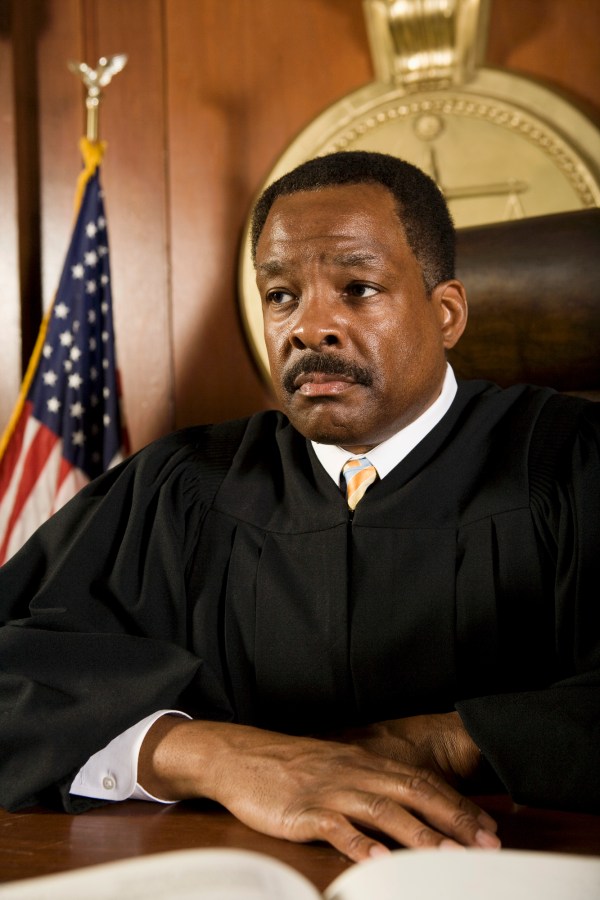
The ability of a local court to issue an injunction to impose a temporary stop to a law at the beginning of the process arguably runs counter to this system of vetting of legal issues from level to level before a matter reaches the highest court. This system allows various appellate (regional) courts to weigh in before a matter reaches the highest court, thereby providing opportunity for ample argument at multiple levels before an ultimate decision is made.
Of course, this process takes time and can seem painstakingly slow. The court system is not designed to work quickly, and that is purposeful. The system is designed to make sure that court decisions are not rushed and that every opportunity is provided for all angles to be considered.
This brings me back to where I started. Donald Trump has thrown off constraint since he took office not even two months ago, and he has worked at an unprecedented pace to reverse and undo many things. He has pushed the envelop of the law in many ways as quickly as he possibly can.
I am not going to comment here about all the ways he has done that or whether his actions are in keeping with or in opposition to the law and his executive authority. These things will ultimately be decided by the courts, and it will take time.
The time it will take for these many incursions that are arguably beyond executive powers is the point of tension here. Donald Trump seems to be counting on the fact that he can move faster than the courts (and Congress) can keep up. His is taking full advantage of his ability to make decisions with the stroke of a pen, and he is shortcutting and overwhelming the systems that provide checks and balances on that executive power.
I don’t want to suggest that executive orders are, therefore, illegal. They aren’t. Many presidents have taken advantage of the ability to make a significant impact with the stroke of an executive pen with recently increasing novelty, including Barack Obama and Joe Biden, but, no one has pushed this power as far and as fast as Donald Trump.
The extreme way in which Trump has exercised his executive authority since he took office is a not necessarily a departure in kind from previous presidents, but it is a departure in the scope, and volume, and speed, and daring to push the limits of this uniquely executive privilege. Trump’s actions have exposed a weakness in the constitutional design of checks and balances that the founding fathers created: the executive branch can act faster than the other branches can respond.
This fact underscores the tension in the current case before the Supreme Court on the authority of local courts to enact injunctions at the beginning of the trial process that apply nationwide. In my mind, the idea that a local court has the immediate power to impact the nation runs counter to the intentions and design of the court system in the same way that Donald Trump’s extreme use of executive power runs counter to the design of the executive branch in relation to the other branches of government.

The Supreme Court seems to be facing the impossible task of choosing between two extremes that both run counter to the checks and balances built into our constitution. This case represents a constitutional crisis of sorts, and how the Supreme Court sorts it out will have significant ramifications.
The actual determination of the underlying issue on birthright citizenship may take years. If the courts side with the longstanding precedent of the Wong Kim Ark case, it may come too late for tens of thousands of Dreamers (children born in the United States to non-citizen parents).
As critical as that issue is, a more critical issue, perhaps, is the scope and extent of executive authority that has been expanded over the terms of many presidents and is now being pushed further and faster than ever before. Where does it stop? Will the genie ever be put back into the bottle? Will future Democratic presidents be as fast and furious in pushing their agendas as Trump is doing? Will our system of government with its checks and balances survive intact?
 Perspective
Pingback: The Birthright Citizenship Case Exposes a Constitutional Crisis Unfolding – Navigating by Faith
Pingback: It’s Not About Birthright Citizenship… Yet, But the Supreme Court Decision Will Radically Affect the Course of Our Nation | Perspective