Gruber Exposes What is Wrong with Politics

Uncle Sam Sick in BedJonathan Gruber, a previously little known MIT professor, has stumbled into the national limelight with statements about “stupid voters” and the intentional use of non-transparency in drafting and promoting the Affordable Care Act (ACA) so that voters would not realize what was in it.

Gruber candidly admitted the promoters of the law determined it would not have passed but for the non-transparency, quickly adding that it was important to keep the truth from the voters because the law was too important to risk not passing it.

Regardless of one’s view of “Obamacare”, our nation should be up in arms over the revelation that non-transparency was employed by design in the drafting of the law and in getting it passed. We should be outraged and offended at the notion that we are too stupid to understand and not to be entrusted with the a clear explanation. American citizens should be taking action to ensure that our nation’s law, which require transparency in government, are enforced at the highest levels.

One MSNBC blogger, however, called the “Jonathan Gruber mess” much to do about nothing. (MSNBC)

Champions of the ACA are scrambling to minimize the damage and downplay Jonathan Gruber’s role in writing the law and getting it passed.  Nancy Pelosi says she does not know who Jonathan Gruber is. (Washington Post) Nancy Pelosi responded soon after his remarks leaked out to the public that Jonathan Gruber was not involved in the drafting of the Affordable Care Act. Unfortunately for Pelosi, the Washington Post found a 2009 video in which she specifically cites Gruber’s work associated with the Act. (Washington Post) Sarah Kliff of left-leaning Vox.com, now says Gruber was “merely a number-cruncher”, though she previously said Jonathan Gruber “pretty much wrote Obamacare.” (the redstate.com)

Unsurprisingly, the real politicians are not as apt to be candid, as Jonathan Gruber was, about the facts.

Ironically, Nancy Pelosi’s 2009 comment cites Jonathan Gruber for the point that the ACA bill (then) will bring down the spiraling costs of health care. (Washington Post) Jonathan Gruber, himself, however, says that the ACA was never intended to bring the costs of health care down. In fact, he pointedly said it would not bring the costs of health care down; they just had to spin it that way because that is what the voters wanted to hear. (See the video of Gruber’s statement in the Washington Examiner) This is another variation on the “stupid voters” statement that has put Gruber in the public and Congressional cross-hairs.

The post remarks spin on Gruber is disingenuous and underscores the lack of honesty and transparency in our government at the highest level. Nothing is more disheartening to me than this utter lack of forthrightness in our federal government that appears to be fueled and justified by an elitist notion that “they know what is best for us” (so it does not matter how oblique they are with the American voters).

An article at reason.com shows just how disingenuous the backpedaling is. “These reactions from Obama and others were, for the most part, technically true—but nonetheless misleading about Gruber’s influence on the law. At a minimum, they were not fully transparent about his role.” This article lays out how intimately and completely Gruber was involved in both the drafting of the law and in selling it to the public.

The elitist idea that politicians know best and, therefore, are justified in obfuscating the facts in order to pass a law is dangerous thinking! It is fundamentally un-American. It is the primary reason that people are so skeptical and do not trust politicians; indeed, “politics” is a dirty word for reasons like the Gruber remarks.

It is not the remarks, per se, but what they reveal. The Gruber remarks epitomize all that is wrong with politics. He said in one of the videos that has been circulating around, “Lack of transparency is a huge political advantage.” The remark reveals an attitude that anything goes as long as we succeed. Succeeding in politics means advancing the party’s platform and (most importantly) staying in office at all costs. Transparency should be the unequivocal benchmark that is protected with non-partisan diligence, but it turns out it is merely a partisan tool to be discarded for a more expedient device.

In the congressional hearings, Gruber seems to be using “the stupid defense” to explain the statements that he made. (townhall.com) (He says they were glib and inappropriate; he says he was trying to make himself look smart on subjects (politics) about which he is ignorant.) I am disposed to believe he is just being dumb like a fox. It seems completely disingenuous.

On the other hand, maybe there is something different about Gruber (from professional politicians). Maybe there is some semblance of sincerity in his obsequious explanation for the “glib” and “inappropriate” remarks when he says, that he was not as smart as he thought he was and should not have tried to wade into the politics of the Act. Politicians would not be so glib (think candid). They are more practiced in the art of making appropriate remarks (think spin and cover up). Gruber’s forthright (albeit arrogant) admissions of the game plan for Obamacare would not come out of a practiced politician’s mouth.

In the same congressional hearing, Jonathan Gruber stated under oath that he was not the “architect” of Obamacare. (Fox News) Calling him the “architect” may or may not be an accurate description, but he was most certainly involved. Gruber may not have been “the” architect of Obamacare, but he spoke at length on the “detail we considered when we wrote the Law” at a presentation in 2012. (January 18, 2012 Speech) During the recent congressional hearing, Gruber refused to disclose how much money he made from his work on Obamacare. (thefiscaltimes.org (unofficial estimates are between $2 million and $5.9 million))

It appears that Gruber has learned a thing or two about politics since he made the candid remarks that got him trouble, and that is not a good thing.

I am afraid that the real problem with politics in this country will be lost in the partisan scramble to make hay out of the Gruber debacle. People will forget the exposure of the ugly underbelly of politics for all of the furor over health care issues. They will miss the forest for the trees. Health care is an important issue in this country, as Gruber even pointed out. We need to fix health care, but Gruber exposes a more fundamental, farther-reaching and indemic problem, and that is politics itself!

I am afraid that problem will be swept under the rug, by both sides. Gruber’s forthright statements about non-transparency are fodder for Republican opportunists, but they may only be useful for partisan purposes. They will be used to advance the conservative cause, but they are much too dangerous to be used for any other purpose. If Congress took the time to focus on the what is wrong with politics, they would all have to play dumb.
Taxation, Representation and Morality

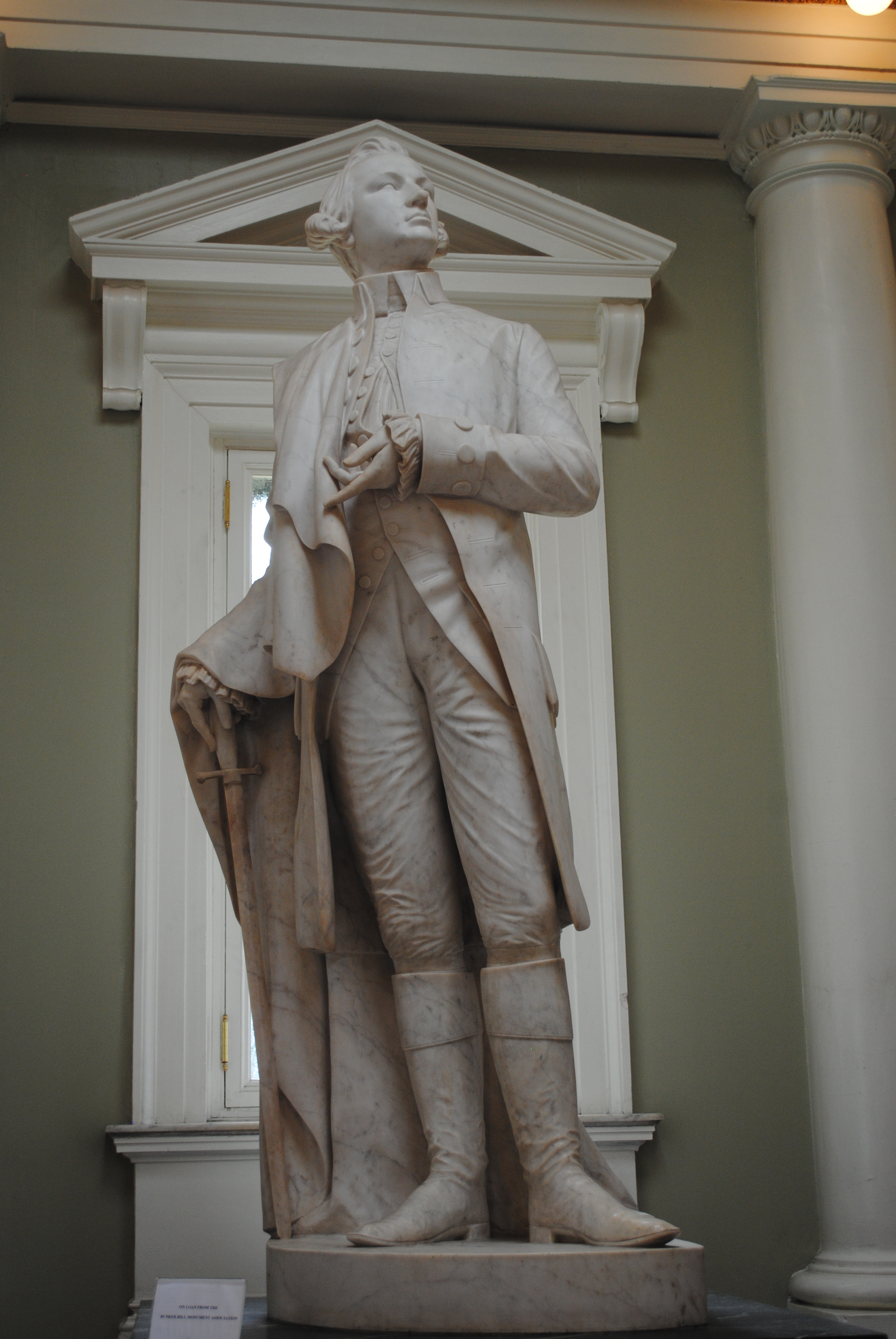
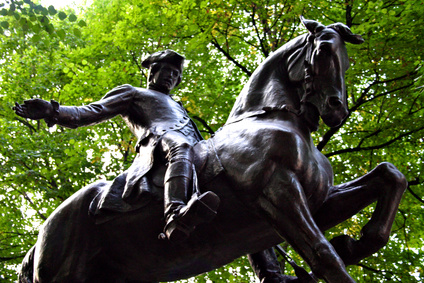
paul revere statue, north end, bostonDSC_0096DSC_0100

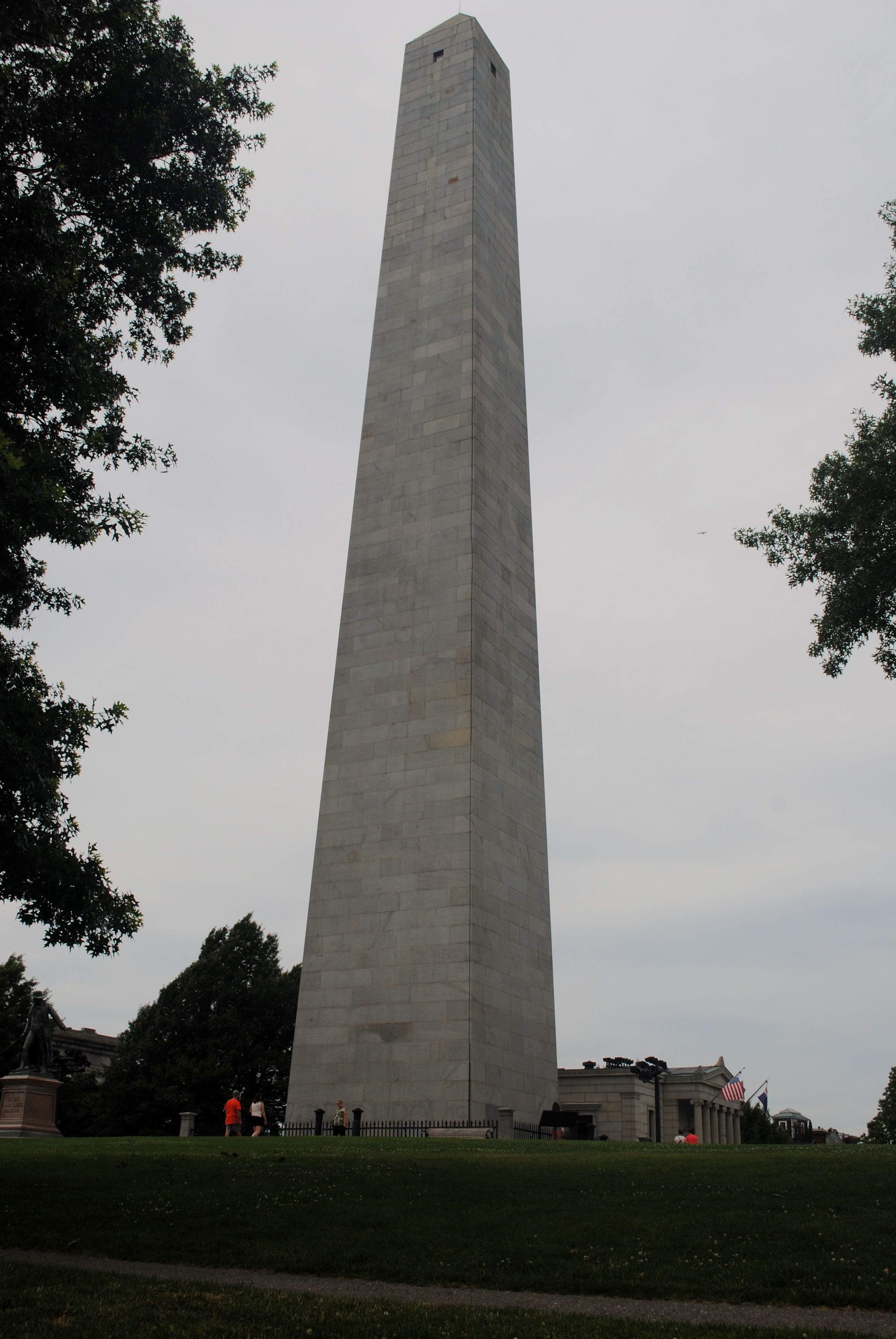
My wife’s recent visit to Bunker Hill in Boston on a trip to New England to see her family got me thinking about the “Boston Tea party” and the dumping of tea into the Boston Harbor to protest British taxation. “No taxation without representation” was the rallying cry at that time.

That slogan seems odd today. Taxes are a part of our lives and seemingly always have been. But it wasn’t always like that.

Federal taxation was very limited through the first 137 years after the Revolution. From 1791 to 1802, only certain goods were taxed. Sales taxes were used to fund the War of 1812 but were eliminated in 1817 when the funding was no longer necessary. The first federal income tax was imposed in 1862  to fund the Civil War and was eliminated in 1872 when it was no longer needed.

Until the twentieth century, federal taxes generally, including income taxes, were only used for specific purposes, primarily for protection of the country. That changed in 1913 with the 16th Amendment to the US . That year a permanent income tax was established, and we have not looked back. (Click here for more on the history of taxes.)

The level of taxation to which we have become accustomed is a modern construct, and federal government self-restraint is a now thing of the past.

We have traveled far from the days of the Revolution. Gone is the moral outrage over the taxation, among other things, that led to the Revolutionary War. Now we see a different morality at work that is evident in President Obama’s recent statement, “I don’t care if it’s legal, it’s wrong.” He was speaking of the increased tendency for corporations to move their headquarters out of the US to avoid the payment of higher taxes in the US, but that is an outgrowth of a new moral construct that has at work today.

Bear in mind, the President recognizes that the companies are doing nothing illegal. They are taking advantage of provisions written into the tax code. The present prevailing morality, however, of which the President is the chief spokesman, condemns the avoidance of taxation. Where our leaders once sought to be free of taxation and government rule in favor of private enterprise; now taxation and government control is the moral hue and cry.

Consider this however. There are mechanisms that all people and businesses use to avoid paying higher taxes. Those mechanisms are all written into the Internal Revenue Code. For instance, every person can assert an individual exemption, and taxpayers who are married with children may assert individual exemptions for each spouse and child. Is the use of those exemptions a moral issue?

People commonly refer to these mechanisms that are written into the tax code as “loopholes”. They are not loopholes, really, but provisions that are part of the tax code that are available to people and businesses to reduce the amount of tax they pay. The word, “loophole”, itself, suggests a moral position.

Many of the “loopholes” were designed to encourage certain behavior. For instance, we are allowed to deduct mortgage interest, which is an encouragement for people to buy houses. Deductions for the purchase of energy efficient appliances and home improvements are intended to encourage people to buy them. Charitable donations are meant to encourage charitable giving.

Some might might consider the exercise of individual taxpayers’ rights to minimize their taxes an exercise of individual representation that was won when the founding fathers shook of oppressive British control. But there is a counter revolution that is growing in support. The current Commander in Chief is the most prominent spokesman, but there is also a ground swell of grass roots support.

A large segment of modern US society seems to consider it immoral to avoid taxes, albeit legally. It is a selective morality to be sure. No one seems to argue that individuals should not use the exemptions available to them…. unless they are too successful at using those exemptions. But, where do we draw the line? When is it morally alright to avoid taxes, and when is it morally wrong? Is there a moral obligation to pay more taxes than one should?

Frankly, it is not a moral issue at all, and it never has been. It is control issue. It is an ideological issue. But, it is not a moral issue.

Some tax avoidance devices are are not as straight forward. Some mechanisms may not have been what Congress intended when it passed the current code and the amendments to it, but the mechanisms people use are based on the way the Internal Revenue Code is written. Certainly, the tax code is unnecessarily complicated, and that complexity has spawned a large industry based on maximizing the use of the tax code provisions to minimize taxes.

Instead of condemning behavior that is legal as immoral, albeit legal, should we not focus on changing the tax code instead condemning legal behavior?

That is how it should work, but we have a disturbing trend occurring. Congress is becoming more polarized and less effective and less capable of reaching consensus or compromise to get things done. Most people (even Congressmen) agree that tax reform (and immigration reform and other things) must be addressed, but they cannot work together to get anything done. Members of Congress seem more concerned about getting reelected and pandering to constituents than taking on these issues that must be addressed.

At the same time, we see our current President rushing into the void and wielding an ax and a pen to cut out and to add to the law as he, unilaterally, determines. The rule of law is being jeopardized in the process and power is concentrating in the executive office as it never has before in our history. I would add that it is not the raw number of executive orders and other executive actions, but the character and impact of them that threatens the checks and balances that have protected us from our government all these years.

Government is necessary in a civilized society, but government restraint is necessary in a free society. The larger our government gets, the more it has the ability to become oppressive. The further away from local control government is, the more out of touch it becomes. The larger government gets, the more bureaucratic and inefficient it becomes. These are principles that informed the founders of our country, but we seem to want to abandon them now.

Further, in spite of federal taxation that has been the rule for the last 100+ years, the budget deficit swells out of control. That is a moral issue, in my opinion, as we add every day to the burden our children and grandchildren will have to carry.

We are tending in a direction that I think our founding fathers would find frightening and disheartening. Taxation in and of itself is not a bad thing, but the rallying cry today might be, “No taxation without self-restraint!”

Congress does not effectively represent the people at this time in our history. The areas that most people agree need to be addressed are not being addressed because of partisanship, factions, incivility and unwillingness to compromise. Rhetoric on both sides is becoming increasingly polarized. Even our media is now partisan. At the same time, we see an increasing tendency toward a moralism that is above the law. That moralism is becoming the justification to make unilateral decisions that are not representative of the people, but representative of an ideology.

The combination of Congressional inaction, unilateral executive actions and selective enforcement of existing law is triggering state and individual reaction. There is change in the wind. The forces are lining up on either side and digging in. The future is at stake and the outcome is uncertain.

Change is inevitable, but will it be change that is representative of the people? Or will it be change that is imposed by a moral elite from the bully pulpit with the force of a powerful, central government that is loosing touch with the people?

The Media and the Genie in the Bottle

Question MarksIt has long been the cry from the Right that “the media” has a liberal bias. Recently, Sharyl Attkisson just resigned from her two decades long stint with CBS citing “liberal bias” as the culprit. (See Sharyl Attkisson resigns from CBS News as reported by Politico Magazine online.)

For grins I searched the following sites in vain for any word about the resignation of the long time CBS reporter: Nothing on CNN, NPR not even on CBSNews. Not surprisingly, I did find plenty on Fox News, including a tweet by Britt Hume: “The liberal culture of the major networks news division claims a scalp.” This was in response to Sharyl Atkisson’s tweet: “I have resigned from CBS.” The lack of any word in the “liberal” media sources, and the corresponding coverage by the main “conservative” media source seems to underscore the notion that media is biased in America.

Is it really any surprise? Gallup polls over the last decade plus report the common perception that the media is biased. (Media Research Center)  The perception is overwhelmingly that the bias is liberal. Over those years, the ratio of people who think the media is too liberal to people who think the media is too conservative has ranged from over 2 to 1 to over 4 to 1.

I am not noting anything new of course, though it does depend on who is asked. Over the same period of time, there were people who reflected the thought that the media is too conservative, but the numbers range from 11% to 19% of those polled; while a consistent 44% to 48% hold that the media is too liberal. The “too conservative” group is comprised primarily of those labeling themselves Democrats and liberals. The “too liberal” crowd is overwhelmingly the Republican and conservative group. (Gallup)

Can there be any doubt that our perspectives and our positions depend on where we stand?

It seems that the collective “we” used to maintain the pretense that reporters and news agencies are unbiased. Sure, journalism schools preached the party line. People, however, are not unbiased; and, frankly, I doubt reporters ever really were unbiased. People are people in whatever era they live, and people have biases. In years gone by, reporters and news agencies may have made more of a concerted effort to maintain the ideal, but the ideal is certainly more of an illusion than reality.

I have rued the “loss” of the unbiased media ideal in a reflexive sort of way myself. Some honest reflection on the other hand leads me to wonder why I/we ever bought into the notion that people can be unbiased at the core.

More of a concern is the loss of trust in reporting. Gallup has chronicled that growing distrust over the last decade. In the last seven years, less than half the people polled trust in the media, and well over half the people polled trust the “not very much” or not at all. (See Gallup)

Interestingly, Democrats responded that they trust the media in high numbers – no lower than 59% and as high as 70%. That stat, alone, affirms the media has a liberal bias. Republicans report little trust in the media –never above 49% and as low as 25%. Independents, too, have comparatively little trust in the media, though ranging higher than Republicans – topping out at 53% and falling to 31%. (See Gallup)

In my own interactions I have heard visceral reactions expressed by conservatives to liberal media outlets and just as visceral reactions to Fox News. Let ‘s face it: Fox News is the only major media outlet that leans the other way. Each side of the spectrum dismisses the other the opposite media source ab initio. That, to me, is more troubling than the false notion that media is objective or the resigned realization that it is not objective.

We all stand somewhere on the spectrum, and we calculate the world from that reference point. Pretending we do not is dishonest. Pretending the “the media” does not do that is dishonest. Unbiased reporting was once held out as a professional standard. Appearances were kept up to pretend it was observed. In this day of the Internet, we can no longer give any credence to that illusion. The genie is out of the bottle. Was it ever in the bottle to begin with.

We should really stop the pretense that media is (or can be) unbiased. We should stop the surprise and indignation. “The media” are people, and people have biases! I dare say we should all spend some time entertaining “the other side” of the spectrum from us. I doubt it will change any of our minds, but it will help us understand each other a little better.

Who is More Charitable?

charity road sign arrowAs I was driving home from the office tonight, a conversation on NPR got me thinking. The participants in the discussion clearly assumed that conservatives are less generous than liberals. They recited the reasons why conservatives opposed certain legislative initiatives as if they had the blue print to the conservative mind and heart…. , but did they?

I decided to research the matter as best I could. This is what I found:

The first thing I found was from the Democratic Underground. Based on a study done in 2008 by the Internal Revenue Service of taxpayers throughout the country, The Chronicle of Philanthropy reported, “The eight states where residents gave the highest share of income to charity went for John McCain in 2008. The seven-lowest ranking states supported Barack Obama.” The middle class earners (making $50,000-$75,000) were more generous than those making more than $100,000. The more deeply religious areas of the country were more generous than the less religious areas of the country.

George Will, of course, cites the Brooks Study. He points out that Brooks is a self-labelled independent and was surprised by the data, so surprised that he initially thought it was faulty. Among the findings were these: 1) “Although liberal families’ incomes average 6 percent higher than those of conservative families, conservative-headed households give, on average, 30 percent more to charity than the average liberal-headed household ($1,600 per year vs. $1,227)”; 2) “Bush carried 24 of the 25 states where charitable giving was above average”; 3) “People who reject the idea that “government has a responsibility to reduce income inequality” give an average of four times more than people who accept that proposition”; 4) “America is largely divided between religious givers and secular nongivers, and the former are disproportionately conservative. One demonstration that religion is a strong determinant of charitable behavior is that the least charitable cohort is a relatively small one — secular conservatives”; 5) Democrats represent a majority of the wealthiest congressional districts, and half of America’s richest households live in states where both senators are Democrats”; 6) “Vice President Al Gore’s charitable contributions, as a percentage of his income, were below the national average: He gave 0.2 percent of his family income, one-seventh of the average for donating households. But Gore “gave at the office.” By using public office to give other peoples’ money to government programs, he was being charitable, as liberals increasingly, and conveniently, understand that word.”

From the freerepublic.com citing John Stossel – all but one of the top 25 charitable states voted Republican in the 2004 election; and Stossel noted, “Conservatives are even 18 percent more likely to give blood.” Quoting  Professor Arthur Brooks of Syracuse University, author of the 2007 book Who Really Cares, “When you look at the data, it turns out that conservatives give about 30 percent more. And incidentally, conservative-headed families make slightly less money; “and people who believe it’s the government’s job to make incomes more equal, are far less likely to give their money away.”

From the New York Times, in an article by self-described liberal, Nicholas D. Kristoff, he says, “Liberals show tremendous compassion in pushing for generous government spending to help the neediest people at home and abroad. Yet when it comes to individual contributions to charitable causes, liberals are cheapskates.” A Google study revealed that conservatives give almost double what liberals give in proportion to their income. Kristoff says, “It’s true that religion is the essential reason conservatives give more, and religious liberals are as generous as religious conservatives. Among the stingiest of the stingy are secular conservatives”; and “if measuring by the percentage of income given, conservatives are more generous than liberals even to secular causes.” And another bomb: “liberal donations frequently sustain art museums, symphonies, schools and universities that cater to the well-off. (It’s great to support the arts and education, but they’re not the same as charity for the needy. And some research suggests that donations to education actually increase inequality because they go mostly to elite institutions attended by the wealthy.)” Finally, “People in red states are considerably more likely to volunteer for good causes, and conservatives give blood more often. If liberals and moderates gave blood as often as conservatives, Mr. Brooks said, the American blood supply would increase by 45 percent.”

In going through two pages of responses to my query on Google (who gives more to charity, Democrats or Republicans), I begin to come across commentaries on the same studies over and over. So I stopped. There were some pieces calling the studies into question, suggesting reasons for the differences, observing that religious people tend to give to churches and secular people tend to consider their tax money their giving and noting studies by several universities suggesting that the purpose for the giving triggers more giving alternately for conservatives or liberals, depending on the expressed purpose.

In the end, and without doing any independent research, it seems that Republicans, and conservatives, especially religious conservatives, give more to charity – though religious liberals are also liberal in their giving; while secular conservatives are the least charitable. According to the assumptions clearly couched in the discussion I heard, one would think that all Republicans are secular conservatives; but secular conservatives also had the smallest numbers of the groups studied.  I have no way of confirming the data independently, but I am satisfied, at least, that the assumptions were incorrect. Republicans/conservatives are not less charitable than Democrats/liberals (thought they may be much less adept in conveying their charitable inclinations, or at least are less public about their charity); if anything they are more charitable.