It’s Not About Birthright Citizenship… Yet, But the Supreme Court Decision Will Radically Affect the Course of Our Nation


The birthright citizen case before the US Supreme Court today, could well be one of the most precedential cases the Supremes consider this year, among many that will prove to be significant for years to come.  “Precedential”, as in setting precedence for years to come; not “presidential”, as in relating to the president – though it certainly is that also.

While many people may thank that the issue in this case is birthright citizenship, it is actually isn’t. At. least, not yet. Birthright citizenship is the underlying and ultimate issue to be decided, but the issue before the Supreme Court at the moment is a procedural and jurisdictional one, and the determination of this issue will either allow President Trump free reign (for the time being) to barrel down the aggressive course he has set for deportations (and other things), or it will reign him in and block his ability to move at the pace and in the way he has planned.

The case comes up to the high court on procedural grounds. The substance of the case is not yet at issue. That will await the complete litigation process before a decision is made. The only issue before the Court, now, is whether a federal trial court has jurisdiction to issue a nationwide injunction.

The ultimate issue in the case, birthright citizenship, of course, is a poignant constitutional matter that will have far reaching effect. A decision in favor of the Trump interpretation of the law will dramatically change law as it has been interpreted and applied Since 1898. The substantive issue involves the meaning of the language in the 14th Amendment that establishes birthright citizenship. (See The Birthright Citizenship Case Exposes a Constitutional Crisis Unfolding for detail on the right to birthright citizenship embedded into the 14th Amendment.) The Trump Administration has directly challenged the well established precedent over the last 125+ years, but a determination of that seminal issue must wait.

The procedural posture of this case is the entry of a nationwide preliminary injunction by a federal trial court. This isn’t the first case of its kind. Many trial courts, both federal and state, have issued similar far-reaching orders imposing injunctions at the front end of a case, halting the action challenged, while the litigation plods forward to a long-awaited conclusion.

The 300 lb. gorilla in this case is the jurisdiction of the trial court. Trial courts have limited jurisdiction in our American system if jurisprudence, but the court purported to issue an injunction applicable throughout the entire nation. The high stakes that ride on this decision are evident, but we need to review the design and structure of the nation’s court system to understand why this is an issue.

Continue reading
The Alien Enemies Act of 1798 Decision of 2025 Explained


The US District Court for the Southern District of Texas has now weighed in on the Trump Administration’s invocation of the Alien Enemies Act of 1798, declaring that Tren de Aragua, is a “designated Foreign Terrorist Organization[,] . . . perpetrating, attempting, and threatening an invasion or predatory incursion against the territory of the United States.” With so much speculation and so many assumptions being made, I want to cut through the BS and get to the truth. Before summarizing the opinion, though, a little background is in order.

The Alien Enemies Act of 1798 is a federal law that grants the president “wartime authority” to detain or deport non-U.S. citizens of enemy countries. It was enacted in 1798 as part of a series of laws known as the Alien and Sedition Acts, aimed at addressing national security concerns during a period of tension with France. The Act can be invoked during a declared war, a perpetrated, attempted, or threatened invasion, or a “predatory incursion” against U.S. territory. Those terms are key to understanding the scope of the Act of a President’s authority to invoke it.

In summary, the Act allows the President to target citizens of a hostile nation or government who are not US citizens in a time of war for detention or deportation, and the this law permits these actions to be taken without a court hearing, based solely on citizenship or country of origin of the targeted persons.

Legal scholars question whether a law that targets people based on the citizenship or country of origin would withstand a constitutional challenge. My understanding is (not having reviewed the relevant caselaw) that the Act has not been challenged in court on constitutional grounds, and the present case involving Venezuelan immigrants does not include a constitutional challenge. Therefore, the constitutionality of the Act has not been addressed.

The Act has been invoked only three times in U.S. history: during the War of 1812, World War I, and World War II. This law was the authority cited for the detentions, expulsions, and restrictions targeting German, Austro-Hungarian, Japanese, and Italian immigrants based on ancestry during WWII, and it was the justification alleged for Japanese internment.

The Act is a war power. It is triggered by 1) a congressional declaration of war; 2) a presidential determination of threatened or actual invasion; or 3) a presidential determination of threatened or actual “predatory incursion”. Only Congress can declare war, but the President has the authority to repel sudden attacks (invasions or “predatory incursions”).

Obviously, the ability of a President to invoke the Act without an act Congress requires an invasion or “predatory incursion”. Congressional intent can be gleaned from the way those terms were used in the late 1700’s. According to the Brennan Center for Justice,

“In the Constitution and other late-1700s statutes, the term invasion is used literally, typically to refer to large-scale attacks. The term predatory incursion is also used literally in writings of that period to refer to slightly smaller attacks like the 1781 Raid on Richmond led by American defector Benedict Arnold.”

See The Alien Enemies Act, Explained, Brennan Center for Justice, Katherine Yon Ebright, May 1, 2025

Recent groups have encouraged a non-literal interpretation of the terms to address illegal immigration and trafficking “based on a migrant ‘invasion’ or ‘predatory incursion’ perpetrated by a cartel alleged to be acting as a de facto foreign government.” That creative reading of the law, however, “is at odds with centuries of legislative, presidential, and judicial practice, all of which confirm that the Alien Enemies Act is a wartime authority. (See The Alien Enemies Act, Explained)

The Act has only ever been used in the context of war declared by Congress. President Truman’s invocation of the Act to detain prisoners as late as 1951 was allowed with deference on the presidential determination of when a war terminates (WWII), but the Act has never been used in the history of the nation outside of a declared war.

The Brennan Center for Justice, a progressive non-profit think tank, notes that Fifth Amendment protections apply against discrimination on the basis of race, ethnicity, nationality, etc. For these reasons, they say, courts and presidents have apologized for the Japanese interment during WWII, and scholars have generally held that the Japanese interment was mistaken, if not blatantly unconstitutional. Other legal issues undermine the validity of the law as well. (See The Alien Enemies Act, Explained)  

With that background and explanation of the Alien Enemies Act of 1798. Let’s turn to the opinion that was handed down On May 1, 2025. The opinion is authored by a conservative judge (who happens to be an Evangelical Christian) appointed by President Trump. It recounts the history of the Act with detail and technical fluidity that I will try to explain by focusing on the key language. For the legal nerds among us, you can read the 36-page opinion yourself. (See J.A.V. et al., v. Donald Trump, Civil Action No. 1:25-CV-072 (So. Dist. TX)(5-1-2-25))

Continue reading

It Never Should Have Come to This

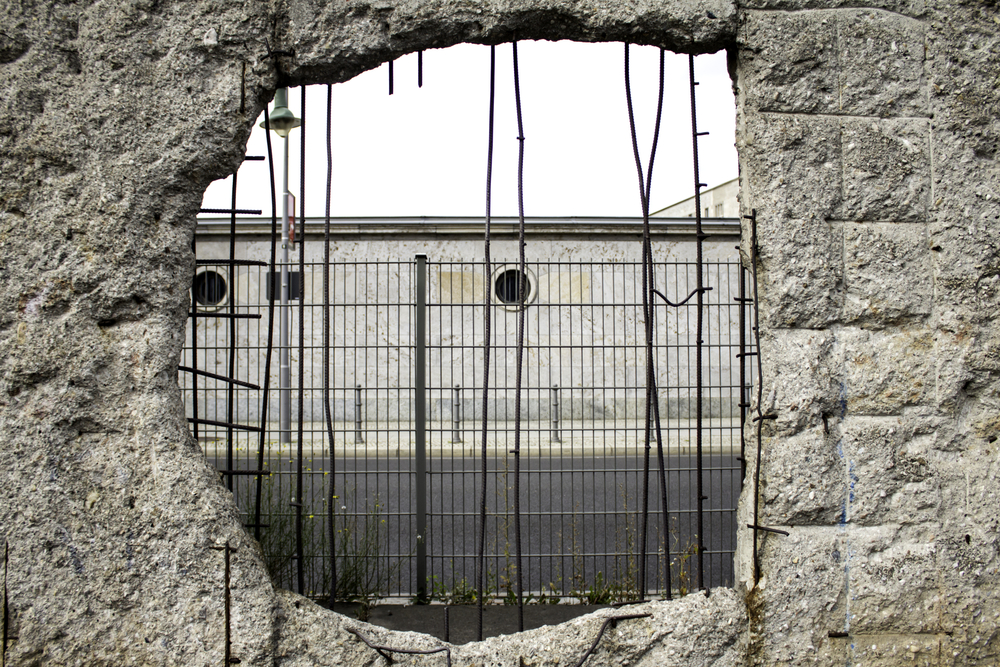
Remains of Berlin wall, Germany

My family, in both parental lines of ancestry, have been in the United States for generations. Some of them for centuries. Yet, the current immigration tensions hit home with me. My family descends entirely immigrants to this land (unless I have some Native American blood in my ancestral lines of which I am not aware of any). In other words, I am a typical American.

Americans live in a nation long described as a “Melting Pot”. Various streams of immigration have continuously filtered into this land we now call the United States of America since the land was discovered by European explorers not that long ago in the historical scheme of the world. The Vikings, Portuguese, Spanish, French and English were the first streams of immigrants. At various times Irish, Chinese, Italian, German, Puerto Rican, Vietnamese, Mexican and many other people groups have added to that stream.

I am neither a blind patriot nor a self-loathing radical when it comes to this nation’s history. Neither is this a time for naked idealism. Our past indiscretions in the way we treated Native Americans shouldn’t be brushed under the rug, but the great Democratic experiment that has been called a shining city on a hill to the world should not be discounted either.

The truth is nuanced. The truth is messy. Idealism isn’t necessarily a lie, but it requires an emphasize on the truth that serves the ideal, and it ignores the truth that doesn’t. We should not be blind to any portion of the truth. As a wise man once said, “Those who forget the past are doomed to repeat it.” (Or something like that)

The aspects of the American experiment that shine a light in the world include the bedrock value of individual freedoms and a welcoming attitude toward the streams of foreigners who have come here to make a better life. This has been a land of opportunity, if not always perfectly available to all, that is still exemplary in the world despite its warts…. until recently.

Continue reading

America’s Changing Melting Pot


So here’s a thought, but first, consider these statistics:

In 2016, in 26 states, the number of non-Hispanic whites who died was greater than the number of non-Hispanic whites who were born in those states, according to an analysis by the U.S. Census Bureau that was released last week. The 26 states were a diverse group in terms of geography and demographics, from Maine to Alabama to California. Nationwide in 2016, there were 0.98 births for every death among non-Hispanic whites, a rate lower than that of blacks (1.71), Asians (3.87) and Latinos (4.88).

I have seen numbers like these before on a national scale. We are tottering on the edge of population regression. People get married less, marry later, have fewer children, and these factors contribute to our population decline – at least among white Americans. Most European countries are well beyond us in this population regression cycle.

Blacks, Asians, Latinos and others have more children than whites do. If the trend continues, whites will become the minority as compared to non-whites. My children went to a school district in which whites are already the minority.

So what are the implications of this development?

Continue reading

Whose Side Are We on?

depositphoto Image ID: 12096314 Copyright: ZouZou

depositphoto Image ID: 12096314 Copyright: ZouZou

I saw this posted on Facebook:

Apartheid was legal,

The Holocaust was legal,

Slavery was legal,

Colonialism was legal.

Legality is a matter of power, not justice.

I am not sure of the point of this meme, but it got me thinking. For one thing, power and injustice don’t always go together, but there is certainly a strong correlation between the powerful and injustice to the powerless.

In that context, think about these words from the most famous sermon given by Jesus:

“Blessed are the poor in spirit, for theirs is the kingdom of heaven.

“Blessed are those who mourn, for they shall be comforted.

“Blessed are the meek, for they shall inherit the earth.

“Blessed are those who hunger and thirst for righteousness, for they shall be satisfied.

“Blessed are the merciful, for they shall receive mercy.

“Blessed are the pure in heart, for they shall see God.

“Blessed are the peacemakers, for they shall be called sons of God.

“Blessed are those who are persecuted for righteousness’ sake, for theirs is the kingdom of heaven.

“Blessed are you when others revile you and persecute you and utter all kinds of evil against you falsely on my account. Rejoice and be glad, for your reward is great in heaven, for so they persecuted the prophets who were before you.[1]

Jesus was not talking to the powerful in this sermon. He was preaching good news to the poor.[2] He wasn’t urging the poor, the downcast, the meek to rise up and riot or challenge the power of the powerful. He was telling them they were blessed, for great is their reward in heaven!

Continue reading