
Political Labels & Common Ends

© Can Stock Photo Inc. / radiantskies

© Can Stock Photo Inc. / radiantskies

I recently read an article on equality and fairness titled, surprisingly, People Don’t Actually Want Equality, by Paul Bloom published October 22, 2015, in the Atlantic. That article triggered a number of thoughts for me. I wrote about some of them in Equality, Fairness and Me.

In this piece, I want to go in a different direction. I have friends on who span the spectrum of political ideology. I tend to fit somewhere on the conservative side of things, but, as I suspect with most people, you might find my views on either side of the spectrum, depending on the issue. I am not sure how some things came to be labelled “conservative” and other things “liberal”. As for economic issues, I would probably be labeled conservative.

I don’t like the label. All labels are self-limiting. They stand in the way of true understanding. They polarize people and reduce issues to platforms. They inhibit resolution and progress toward commons ends.

We do have common ends! When we get right down to the core of what people want, we pretty much want the same things. We want fairness. We want equal opportunity. We want to be left alone. We want everyone to get along and be happy.

Some people feel that private enterprise, left to itself, will do the right thing and everything will balance out, while government intervention just messes everything up. Other people feel we need government intervention to balance everything out because private enterprise creates inequality. People run the government and people run private enterprise. (Maybe people are the problem!)

I suppose the solution is obvious: some combination of private enterprise and government is the ideal solution. That is also obviously easier said than done. How we get to the ideal solution and what it looks like is a matter of great disagreement.

I do not just speculate that we all want basically the same things. It is not just my opinion. That premise is the exact conclusion of people who have studied these things:

“[W]hen asked about what distribution would be ideal, Americans, regardless of political party, want a far more equal society than they actually live in or believe that they live in. In an article published in The Atlantic, Ariely writes, ‘the vast majority of Americans prefer a distribution of wealth more equal than what exists in Sweden, which is often placed rhetorically at the extreme far left in terms of political ideology—embraced by liberals as an ideal society and disparaged by conservatives as an overreaching socialist nanny state.’”

Ironic, isn’t it? Maybe all of our fighting based on labels of “conservative” and “liberal” are just getting in the way of getting to the resolutions that we all want.

Widening Road to Destruction

Riot by Timothy Dang

Riot by Timothy Dang

The Lonely Road Ahead for Principled Roberts reads the headline to the editorial by Noah Feldman. Go ahead and read it. You can come back to this article. I will wait….

Allow me to add a little background. I beg your indulgence for a short summary of civics. Continue reading

Looking Beyond the Indiana RFRA

protesterThe collective response to the recent adoption of the Indiana Religious Freedom Restoration Act (RFRA) is a marker of the shift in popular culture in my opinion. The swell and direction of popular opinion is unmistakable. The overwhelming will of the people favors the right to be free from discrimination on the basis of sexual orientation, and religious freedom has never been more disfavored in the Western world. The groundswell threatens to unhinge governments and people who stand against the tide. Continue reading

Gruber Exposes What is Wrong with Politics

Uncle Sam Sick in BedJonathan Gruber, a previously little known MIT professor, has stumbled into the national limelight with statements about “stupid voters” and the intentional use of non-transparency in drafting and promoting the Affordable Care Act (ACA) so that voters would not realize what was in it.

Gruber candidly admitted the promoters of the law determined it would not have passed but for the non-transparency, quickly adding that it was important to keep the truth from the voters because the law was too important to risk not passing it.

Regardless of one’s view of “Obamacare”, our nation should be up in arms over the revelation that non-transparency was employed by design in the drafting of the law and in getting it passed. We should be outraged and offended at the notion that we are too stupid to understand and not to be entrusted with the a clear explanation. American citizens should be taking action to ensure that our nation’s law, which require transparency in government, are enforced at the highest levels.

One MSNBC blogger, however, called the “Jonathan Gruber mess” much to do about nothing. (MSNBC)

Champions of the ACA are scrambling to minimize the damage and downplay Jonathan Gruber’s role in writing the law and getting it passed.  Nancy Pelosi says she does not know who Jonathan Gruber is. (Washington Post) Nancy Pelosi responded soon after his remarks leaked out to the public that Jonathan Gruber was not involved in the drafting of the Affordable Care Act. Unfortunately for Pelosi, the Washington Post found a 2009 video in which she specifically cites Gruber’s work associated with the Act. (Washington Post) Sarah Kliff of left-leaning Vox.com, now says Gruber was “merely a number-cruncher”, though she previously said Jonathan Gruber “pretty much wrote Obamacare.” (the redstate.com)

Unsurprisingly, the real politicians are not as apt to be candid, as Jonathan Gruber was, about the facts.

Ironically, Nancy Pelosi’s 2009 comment cites Jonathan Gruber for the point that the ACA bill (then) will bring down the spiraling costs of health care. (Washington Post) Jonathan Gruber, himself, however, says that the ACA was never intended to bring the costs of health care down. In fact, he pointedly said it would not bring the costs of health care down; they just had to spin it that way because that is what the voters wanted to hear. (See the video of Gruber’s statement in the Washington Examiner) This is another variation on the “stupid voters” statement that has put Gruber in the public and Congressional cross-hairs.

The post remarks spin on Gruber is disingenuous and underscores the lack of honesty and transparency in our government at the highest level. Nothing is more disheartening to me than this utter lack of forthrightness in our federal government that appears to be fueled and justified by an elitist notion that “they know what is best for us” (so it does not matter how oblique they are with the American voters).

An article at reason.com shows just how disingenuous the backpedaling is. “These reactions from Obama and others were, for the most part, technically true—but nonetheless misleading about Gruber’s influence on the law. At a minimum, they were not fully transparent about his role.” This article lays out how intimately and completely Gruber was involved in both the drafting of the law and in selling it to the public.

The elitist idea that politicians know best and, therefore, are justified in obfuscating the facts in order to pass a law is dangerous thinking! It is fundamentally un-American. It is the primary reason that people are so skeptical and do not trust politicians; indeed, “politics” is a dirty word for reasons like the Gruber remarks.

It is not the remarks, per se, but what they reveal. The Gruber remarks epitomize all that is wrong with politics. He said in one of the videos that has been circulating around, “Lack of transparency is a huge political advantage.” The remark reveals an attitude that anything goes as long as we succeed. Succeeding in politics means advancing the party’s platform and (most importantly) staying in office at all costs. Transparency should be the unequivocal benchmark that is protected with non-partisan diligence, but it turns out it is merely a partisan tool to be discarded for a more expedient device.

In the congressional hearings, Gruber seems to be using “the stupid defense” to explain the statements that he made. (townhall.com) (He says they were glib and inappropriate; he says he was trying to make himself look smart on subjects (politics) about which he is ignorant.) I am disposed to believe he is just being dumb like a fox. It seems completely disingenuous.

On the other hand, maybe there is something different about Gruber (from professional politicians). Maybe there is some semblance of sincerity in his obsequious explanation for the “glib” and “inappropriate” remarks when he says, that he was not as smart as he thought he was and should not have tried to wade into the politics of the Act. Politicians would not be so glib (think candid). They are more practiced in the art of making appropriate remarks (think spin and cover up). Gruber’s forthright (albeit arrogant) admissions of the game plan for Obamacare would not come out of a practiced politician’s mouth.

In the same congressional hearing, Jonathan Gruber stated under oath that he was not the “architect” of Obamacare. (Fox News) Calling him the “architect” may or may not be an accurate description, but he was most certainly involved. Gruber may not have been “the” architect of Obamacare, but he spoke at length on the “detail we considered when we wrote the Law” at a presentation in 2012. (January 18, 2012 Speech) During the recent congressional hearing, Gruber refused to disclose how much money he made from his work on Obamacare. (thefiscaltimes.org (unofficial estimates are between $2 million and $5.9 million))

It appears that Gruber has learned a thing or two about politics since he made the candid remarks that got him trouble, and that is not a good thing.

I am afraid that the real problem with politics in this country will be lost in the partisan scramble to make hay out of the Gruber debacle. People will forget the exposure of the ugly underbelly of politics for all of the furor over health care issues. They will miss the forest for the trees. Health care is an important issue in this country, as Gruber even pointed out. We need to fix health care, but Gruber exposes a more fundamental, farther-reaching and indemic problem, and that is politics itself!

I am afraid that problem will be swept under the rug, by both sides. Gruber’s forthright statements about non-transparency are fodder for Republican opportunists, but they may only be useful for partisan purposes. They will be used to advance the conservative cause, but they are much too dangerous to be used for any other purpose. If Congress took the time to focus on the what is wrong with politics, they would all have to play dumb.

Ferguson and Smart Justice

policewomen.police.people in uniform.team workSometimes I read or hear things from disparate places that are stated in separate contexts that bring home a point about things I am thinking about. That happened this week in regard to the riots in Ferguson and an article on a common denominator among mass murderers.

Everyone by now has heard the story of Ferguson. A cop shot down a monstrous boy/very young man in the middle of the street. Accounts widely diverge from self-defense to cold blooded murder, and the rioting and looting and militaristic police response has been a national saga ever since.

I also read, an op ed piece on the common thread among mass murders in recent history that was tucked away in the Mad World online written by a conservative, gun right pundit. It can be read here (Nearly Every Mass Shooting has this One Thing in Common, and It Isn’t Weapons).

Those are a couple of pretty unrelated things, right? Maybe not if you are a conservative, gun-right-preaching zealot, or even a left-leaning libertarian gun right believer in protecting one’s self against the excessive force of a rogue government law enforcement agency. But, that is not the connection that these two things had for me.

Mental illness is the thing. I am no expert on mental illness, though I once worked in a state run institution for developmentally disabled adults. While there, I developed distrust for drug prescribing psychiatrists and state run bureaucracies. Those patients were over-medicated, it seemed to me, more to make their caregiver’s’ lives easier rather than for any benefit to the patients; but I admit my observations were not educated ones.

The point of the article is that nearly all of the recent mass shootings were perpetrated by people who had been prescribed psychotropic drugs – SSRI drugs (Selective Serotonin Re-Uptake Inhibitors). These are drugs with common names such as Zoloft, Luvox, Prozac, Ritalin (I am not sure that is one), Paxil, etc.) You can see the list of perpetrators and their drugs at Ammoland Gun News (yes, Ammoland Gun News, believe it or not)

Something did not sit right for me about the article so I asked a friend about it. My friend, who works in the psychiatric field with her husband, commented that the shooters likely became manic or had a “mixed episode” of mania and depression after taking the SSRI or the stimulants because, in fact, their correct primary diagnoses were actually bipolar disorder, not major depressive disorder or anxiety disorder or ADHD. SSRIs are potentially dangerous if prescribed for bipolar disorder.

She also told me, on average, it takes a psychiatrist in the U.S. 10 years to make a correct diagnosis for bipolar disorder, maybe even longer if it is the milder version, bipolar II. That is really pathetic. (Her words) The other piece of information that is not included here that should be is that many people with mental illness go on aggressive sprees when they are just getting sick with the onset of the disorder and have not been prescribed meds yet.

Well, that got me thinking. I am no expert, but I know people who are; and they tell me that treatment of mental illness in our country is severely lacking. Our government funds many things, but the treatment of mental illness is severely underfunded. Health insurance also does not cover mental illness to the degree of other illnesses.

Then I heard an interview on NPR, which is the thing that began to bring these seemingly disparate subjects together for me. I strongly encourage you to listen to this piece titled, Mental Health Cops Help Reweave Social Safety Net in San Antonio.

According to this piece, “jails hold 10 times as many people with serious mental illness as state hospitals do”, referencing “a recent report from the Treatment Advocacy Center, a national nonprofit that lobbies for better treatment options for people with mental illness.” To deal with the problem of mental illness and overcrowded jails, “San Antonio and Bexar County have transformed their mental health system into a program considered a model for the rest of the nation. Today, the jails aren’t full, and the city and county have saved $50 million over the past five years.” The San Antonio effort is “called ‘smart justice’ — basically, diverting people with serious mental illness out of jail and into treatment instead.”

$50,000 saved! You must listen to the officer who was trained to deal with mental illness encounter a young man acting weird. The officer admits the man would have been taken to jail years ago, under the old system. In this segment, the officer takes a much different approach, and the difference is dynamic.

Overarching these various things is the idea that “kindness matters” – to borrow a term used recently in an opinion piece in a local newspaper written by…. a police officer. Novel idea!

Not that no police officers are kind, but things are definitely different from when I grew up. A final interview I heard with a 30 year law enforcement veteran revealed something that I did not know. Apparently, police training across the country over the last 30 or more years has taken a more militaristic turn from the “serve and protect” model of local police who walked a beat. This veteran expressed concern over this development, which has been long in the making. Police officers are trained differently, and that training is having an effect.

There is a different way of going about law enforcement that emphasizes “smart justice”. Mental illness is not the cause of all our society’s problems, but it must be addressed. People with mental illness need treatment. Their behavior is more of a manifestation of that mental illness than criminal intent.

Not every punk kid encountered on the street is going to be a career criminal. I was one of those punks. I can still remember the grace I was shown as a kid by local law enforcement who were more father than soldier to me, and I will be forever grateful. I still do not know what I was thinking through those dark years of my life, but I can only liken it to temporary insanity (exaggerating slightly of course).

In fact, if I were “mistreated” in any way, it would have reinforced my sense of “the man” I thought I was fighting back in the day, and I might be still fighting the man today. Now, I am proud to be a contributing part of the community that treated me well when I did not know any better.

I will end with a little pseudo-science and philosophy. Newton observed “for every action, there is an equal and opposite reaction.” I think that may be true of people and relationships. Force draws one reaction; kindness draws another reaction. We need to be smart about how we deal with societal problems.

Taxation, Representation and Morality

paul revere statue, north end, bostonDSC_0096DSC_0100

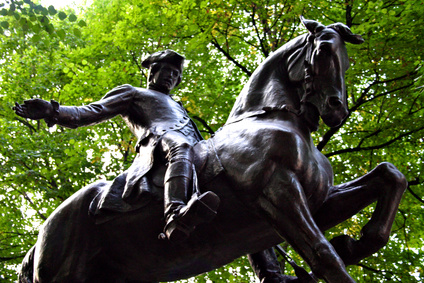
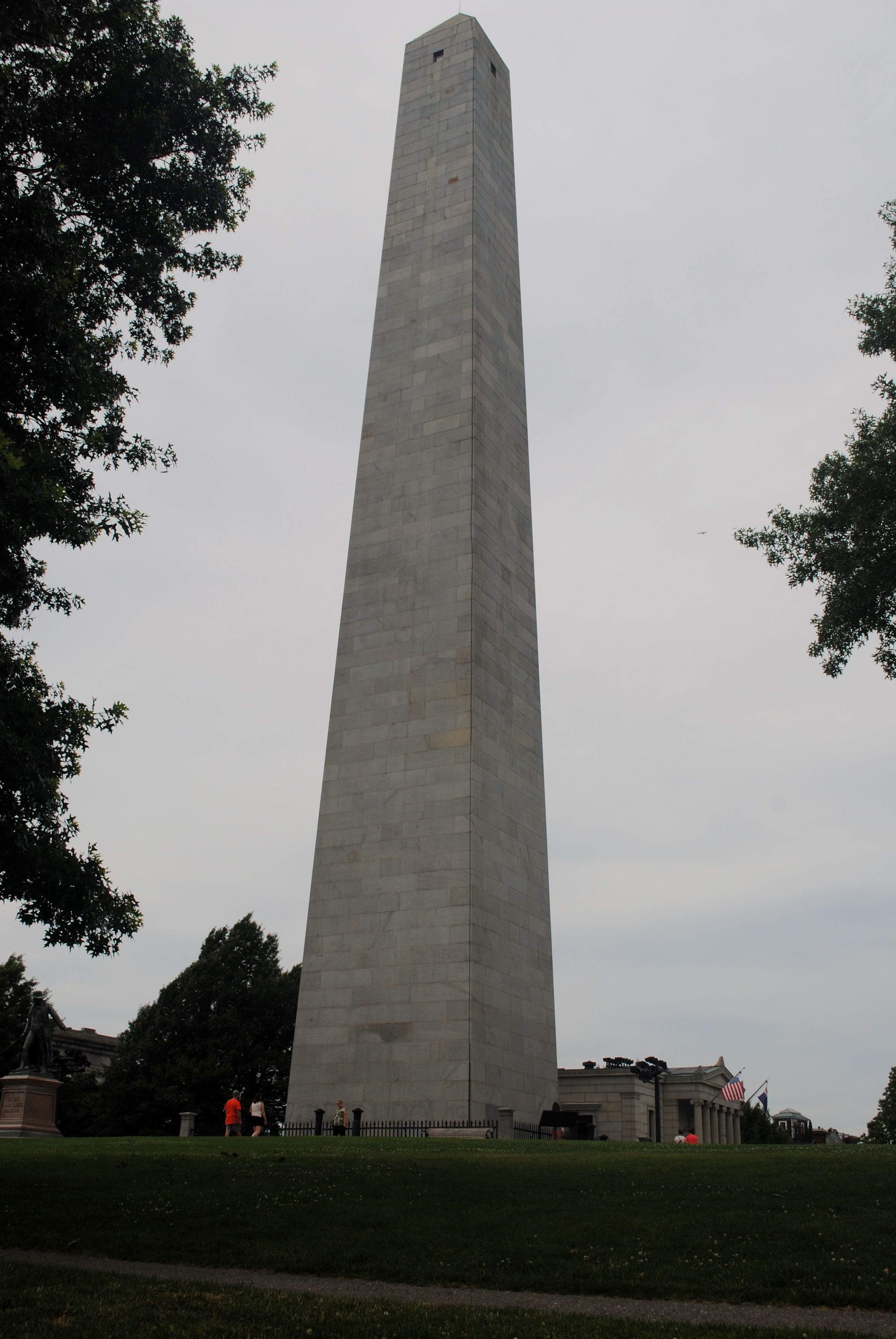
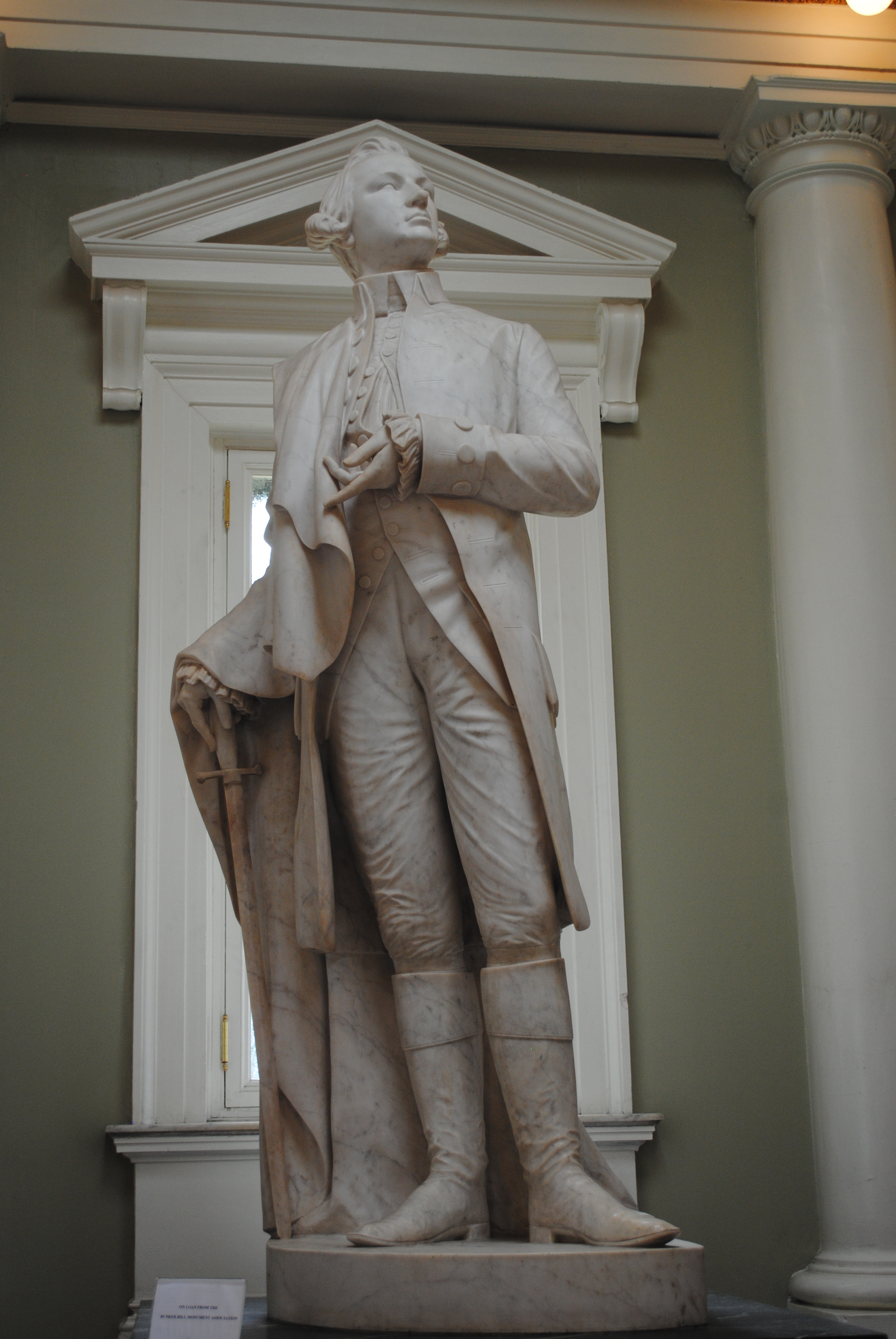
My wife’s recent visit to Bunker Hill in Boston on a trip to New England to see her family got me thinking about the “Boston Tea party” and the dumping of tea into the Boston Harbor to protest British taxation. “No taxation without representation” was the rallying cry at that time.

That slogan seems odd today. Taxes are a part of our lives and seemingly always have been. But it wasn’t always like that.

Federal taxation was very limited through the first 137 years after the Revolution. From 1791 to 1802, only certain goods were taxed. Sales taxes were used to fund the War of 1812 but were eliminated in 1817 when the funding was no longer necessary. The first federal income tax was imposed in 1862  to fund the Civil War and was eliminated in 1872 when it was no longer needed.

Until the twentieth century, federal taxes generally, including income taxes, were only used for specific purposes, primarily for protection of the country. That changed in 1913 with the 16th Amendment to the US . That year a permanent income tax was established, and we have not looked back. (Click here for more on the history of taxes.)

The level of taxation to which we have become accustomed is a modern construct, and federal government self-restraint is a now thing of the past.

We have traveled far from the days of the Revolution. Gone is the moral outrage over the taxation, among other things, that led to the Revolutionary War. Now we see a different morality at work that is evident in President Obama’s recent statement, “I don’t care if it’s legal, it’s wrong.” He was speaking of the increased tendency for corporations to move their headquarters out of the US to avoid the payment of higher taxes in the US, but that is an outgrowth of a new moral construct that has at work today.

Bear in mind, the President recognizes that the companies are doing nothing illegal. They are taking advantage of provisions written into the tax code. The present prevailing morality, however, of which the President is the chief spokesman, condemns the avoidance of taxation. Where our leaders once sought to be free of taxation and government rule in favor of private enterprise; now taxation and government control is the moral hue and cry.

Consider this however. There are mechanisms that all people and businesses use to avoid paying higher taxes. Those mechanisms are all written into the Internal Revenue Code. For instance, every person can assert an individual exemption, and taxpayers who are married with children may assert individual exemptions for each spouse and child. Is the use of those exemptions a moral issue?

People commonly refer to these mechanisms that are written into the tax code as “loopholes”. They are not loopholes, really, but provisions that are part of the tax code that are available to people and businesses to reduce the amount of tax they pay. The word, “loophole”, itself, suggests a moral position.

Many of the “loopholes” were designed to encourage certain behavior. For instance, we are allowed to deduct mortgage interest, which is an encouragement for people to buy houses. Deductions for the purchase of energy efficient appliances and home improvements are intended to encourage people to buy them. Charitable donations are meant to encourage charitable giving.

Some might might consider the exercise of individual taxpayers’ rights to minimize their taxes an exercise of individual representation that was won when the founding fathers shook of oppressive British control. But there is a counter revolution that is growing in support. The current Commander in Chief is the most prominent spokesman, but there is also a ground swell of grass roots support.

A large segment of modern US society seems to consider it immoral to avoid taxes, albeit legally. It is a selective morality to be sure. No one seems to argue that individuals should not use the exemptions available to them…. unless they are too successful at using those exemptions. But, where do we draw the line? When is it morally alright to avoid taxes, and when is it morally wrong? Is there a moral obligation to pay more taxes than one should?

Frankly, it is not a moral issue at all, and it never has been. It is control issue. It is an ideological issue. But, it is not a moral issue.

Some tax avoidance devices are are not as straight forward. Some mechanisms may not have been what Congress intended when it passed the current code and the amendments to it, but the mechanisms people use are based on the way the Internal Revenue Code is written. Certainly, the tax code is unnecessarily complicated, and that complexity has spawned a large industry based on maximizing the use of the tax code provisions to minimize taxes.

Instead of condemning behavior that is legal as immoral, albeit legal, should we not focus on changing the tax code instead condemning legal behavior?

That is how it should work, but we have a disturbing trend occurring. Congress is becoming more polarized and less effective and less capable of reaching consensus or compromise to get things done. Most people (even Congressmen) agree that tax reform (and immigration reform and other things) must be addressed, but they cannot work together to get anything done. Members of Congress seem more concerned about getting reelected and pandering to constituents than taking on these issues that must be addressed.

At the same time, we see our current President rushing into the void and wielding an ax and a pen to cut out and to add to the law as he, unilaterally, determines. The rule of law is being jeopardized in the process and power is concentrating in the executive office as it never has before in our history. I would add that it is not the raw number of executive orders and other executive actions, but the character and impact of them that threatens the checks and balances that have protected us from our government all these years.

Government is necessary in a civilized society, but government restraint is necessary in a free society. The larger our government gets, the more it has the ability to become oppressive. The further away from local control government is, the more out of touch it becomes. The larger government gets, the more bureaucratic and inefficient it becomes. These are principles that informed the founders of our country, but we seem to want to abandon them now.

Further, in spite of federal taxation that has been the rule for the last 100+ years, the budget deficit swells out of control. That is a moral issue, in my opinion, as we add every day to the burden our children and grandchildren will have to carry.

We are tending in a direction that I think our founding fathers would find frightening and disheartening. Taxation in and of itself is not a bad thing, but the rallying cry today might be, “No taxation without self-restraint!”

Congress does not effectively represent the people at this time in our history. The areas that most people agree need to be addressed are not being addressed because of partisanship, factions, incivility and unwillingness to compromise. Rhetoric on both sides is becoming increasingly polarized. Even our media is now partisan. At the same time, we see an increasing tendency toward a moralism that is above the law. That moralism is becoming the justification to make unilateral decisions that are not representative of the people, but representative of an ideology.

The combination of Congressional inaction, unilateral executive actions and selective enforcement of existing law is triggering state and individual reaction. There is change in the wind. The forces are lining up on either side and digging in. The future is at stake and the outcome is uncertain.

Change is inevitable, but will it be change that is representative of the people? Or will it be change that is imposed by a moral elite from the bully pulpit with the force of a powerful, central government that is loosing touch with the people?