On the Outside

Into the Son


Are you excited to get out of bed in the morning? If not, maybe you need to get on the outside. Maybe you need a hero’s journey. This is a term I had never heard before until I read, The No. 1 Predictor of Career Success According to Network Science, in Forbes Magazine.

Ok… wait a minute … I know what you are thinking. This started out promising; but it just got boring! I am thinking that as I write, but hear me out. Continue reading

I Had a Dream…

2008 Democratic National Convention: Day 4~~~~~~~~~~~~~~~~~~~~~~~~~~~~~~~~~~~~~~~~~~~~~~~~~~~~~~~~~~~~~~

More than 86 years have passed since Dr. Martin Luther King, Jr.’s birth. Almost 50 years have passed since his death. Not insignificantly, we celebrate Martin Luther King Day at the anniversary of his birth, not the anniversary of his death. Though I cannot help but remember the tragic day of his death that left its imprint on my young, impressionable mind, I pray that the legacy of his life will draw us back to his message. May the light of his life outshine the darkness left in the void of his death.

I had a dream….” are the words that echo through the halls of history into our present consciousness. We hear those words repeated with the same sense of passion with which they were first spoken, but they seem dulled by the resistance of time. The present passion with which those words were spoken sits now like a dusty tome on the shelf of our collective memory.

Yet, those words were poignant…they are poignant still today. Continue reading

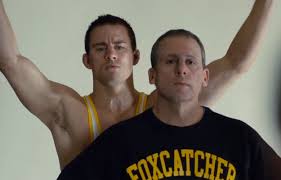
Foxcatcher Re-Visited

Foxcatcher~~~~~~~~~~~~~~~~~~~~~~~~~~~~

Now that I have seen the Foxcatcher movie, I can comment with more certainty and accuracy about it. I wrote about my assumptions in Foxcatcher Pre-Visited. The story itself is a reflection on the sorry state of support for Olympic athletes in our country: the Olympic ideal lives in poverty. But for the lack of support for Olympic athletes, the story would not have happened. Olympic gold medal winning siblings, Dave Schultz and Mark Schultz, would not have needed to rely on the money and support of the psychotic benefactor, John DuPont. There would have been greener pastures for these thoroughbred athletes to play out their careers.

The movie is more than that, however. It is about character, strength and weakness. Character, strength and weakness are not always readily apparent until tested in the arena. Some people rise to the test on the strength of character; some people can be inspired by the character of others; and some people want the honor and nobility of character without having the substance of it.

The opening to the movie shows the DuPont legacy as a leading American family in patriotism, wealth, business and developer of champion thoroughbred horses. John DuPont was born into that legacy, but the legacy alluded him personally. From the vantage of the viewer, that legacy was more like a specter that mocked him. DuPont aspired to be part of that legacy, but DuPont’s vision of himself was an apparition.

Steve Carrell is unrecognizable as the ghoulish DuPont. His performance is Oscar worthy. The palatial estate spreads out over hallowed ground near Valley Forge, where he fancied himself a patriot, a philanthropist and a great American person – everything his family history suggested he should be. But, DuPont was friendless, lonely, delusional and psychotic. He settled long ago for the appearance of greatness, having no foundation for the substance in himself.

Channing Tatum is the moody, self-doubting hulk of an athlete, Mark Schultz. The younger Schultz and his brother, Dave Schultz, played by Mark Ruffalo, grew up without a father. The movie is based on the story of Mark, who was largely raised by his brother, only 18 months older. He knew no privilege, but for the natural gift of athleticism that he had in spades. The Olympic gold medal he won, the pinnacle of athletic achievement, however, was not large enough to plug the gaping hole left by a childhood lacking in parental involvement and stability. Mark had wrestling; but he was alone and had nothing else.

Mark Ruffalo completes the trio of sure Oscar nominees as Dave Schultz. Ruffalo became the affable, elder Schultz, taking on his very mannerisms and demeanor. In reality, Dave Schultz was a student of the sport of wrestling; he was also teacher, mentor and coach, willing to help anyone, even his opponents. Dave had the things money could not buy, including a family. He was honored among his peers worldwide.  He was a virtual ambassador of the sport. Having learned Russian, he was welcomed as a star even in the cold war Soviet Union.

Dave Schultz was gregarious and humble. Only 18 months older than his brother, Dave was a father, brother, mentor, coach, ambassador to the world – he was a great man with real character. Dave Schultz is not the focus of the movie, however. The movie is the Mark Schultz story, and DuPont stars as the parasitic benefactor.

The Schultz brothers rose from the humblest background to world and Olympic champions. Dave Schultz lead the way on the strength of his character, work ethic, study of the sport, personality and relentless pursuit of excellence. Dave Schultz is the real thing, full of substance, honor, nobility, character and achievement that recognized by all.

Dave Schultz is everything John DuPont was not. DuPont was raised in privilege, but he was a wisp of the person he imagined himself to be. We see this in the scene in front of the prodigious trophy case in the generous den of the massive estate was filled with accolades of days gone by. They were trophies not earned by John DuPont. When two Foxcatcher wrestlers won world medals, DuPont had the biggest trophies moved from the case to make room for the two world medals that DuPont also did not earn – a metaphor for his sorry life.

The fact that the World medals were tiny in comparison to the over-sized trophies of thoroughbred horses is also telling. The horse trophies took on more significance in prominence and placement in the cavernous den of the DuPont manor than world medals earned mano-y-mano, through blood, sweat and strength of will in the honest struggle of men against men. The affected nobility of wealth and privilege is more highly valued than the substance and character out of which common men hue their destinies.

Mark Schultz was more affected by the absence of a father and unstable childhood than his brother, maybe, because he did not have to be the strong one. Only 18 years younger than his brother, he was highly dependent on him. He also lived in his shadow of the strength, character and personality of his brother. He thrived in connection with his brother, but he withered apart from him.

DuPont saw that weakness and attempted to exploit it. DuPont desperately wanted to be something, and his way to achieve what he wanted to be was to buy it. He saw the value in the unsung heroes that are wrestlers, and thought he could strap himself to the honorable and noble value of the World’s Oldest Sport like a man strapped to a rocket heading to the moon.

DuPont had never earned anything in his life. His life, position, money and name were all given to him. He had no friends. His accolades were manufactured. He found in Mark Schultz someone who was not adequate in himself, in spite of his achievements. The younger Schultz had nothing but wrestling, while his brother had moved on to family and mentoring others as a father, husband and coach.

DuPont found Mark willing to accept DuPont’s stilted patronage, but he could not thrive under DuPont’s shadowy tutelage. DuPont only fancied himself a coach, a great leader and a man of inspirational substance. DuPont scripted the relationship, but the doughy actor of the story concocted in his own mind could not produce in Mark Schultz the substance that he he desired to replicate.

Eventually, DuPont rejected the weakness in Mark Schultz, though he never seemed to recoil from the façade in which he hid his own weakness. Dave Schultz accepted an offer he could not refuse to give his family a stable environment, something he never experienced for himself growing up, but the affection of Dave Schultz could not be bought. The elder wrestling statesmen immediately took over the Foxcatcher room as easily as strolling into it. Leadership was in his gait and substance was in every word he spoke.

The natural strength and substance of Dave Schultz eclipsed the weak and shadowy DuPont. Schultz would not play the part DuPont wanted of him. He would not allow the shady affectations of DuPont interfere with the real business of training men, including his brother. If Schultz had a weakness, it was that he accepted the assignment for what it appeared: an opportunity to train world champions and provide for his family a stable home. Schultz was a man of substance among men of substance and could not identify with or understand the pretensions of the unstable, delusional mind of DuPont.

In the final scene of the movie, DuPont watches a tape of Mark Schultz giving a speech DuPont wrote for Mark to deliver extolling DuPont as a father figure, mentor and coach. None of it, of course was true. DuPont previously tried a different speech on for Dave Schultz to give, but the older Schultz could not do it – because he would not say what was clearly not true.

DuPont, however, could not accept the truth. As he had done his entire life, he played out the lie. Without any warning and few words, DuPont instructs a servant to drive him to the Schultz house on the compound where Schultz is working on his own car. Schultz greets DuPont, and DuPont shoots him without a word spoken.

In what some might say is the most ironic and poignant scene of the movie, DuPont’s mother refuses to allow him to place a medal DuPont won in an old timer wrestling tournament in the main trophy case. She also tells him, “Wrestling is a low sport. I don’t want to see you low.” Appearances and realities are two very different things.

It is also ironic that DuPont saw the value in the unsung heroics of wrestling, but he could not attain to it. True character and nobility in the movie is seen in the strong but tender Dave Schultz. Privilege and advantage could not give DuPont what he wanted most, but it gave him power –power that he used to buy a facsimile of that honor and nobility; and, when he could not purchase the words from Dave Schultz’s mouth, he simply eliminated Schultz like one of his mother’s thoroughbred horses.


Poverty Level Support for Gold Medal Athletes

Facing Shoulder Surgey & 10 Months of Rehab

Facing Shoulder Surgey & 10 Months of Rehab

This is a sequel to Foxcatcher Previsisted, which was ostensibly about the Cannes award winning film showing in theaters currently about Olympic wrestlers, Mark Schultz and Dave Schultz, and their benefactor, millionaire, John DuPont, who killed one of them. The Foxcatcher piece was a pretense to highlight the sorry state of the “system” that supports Olympic athletes in this country (if you want to call it support). I now have more fuel for the fire.

How Well Are US Athletes Supported by the USOC? is the title of an article by the U.S. Athletic Trust. Not well it turns out. There would be national outrage about the revelations exposed by the U.S. Athletic Trust if more people had sons and daughters chasing Olympic dreams, but the numbers are small. These are the best of the best in their various fields of athletic prowess. The ranks are more elite than professional athletes who pull down multi-million dollar contracts annually.

I have listened to the banter on sports talk radio about the obscene salaries that professional athletes make, which are only outdone by the even more obscene money professional sports franchises make off of these athletes. Since the money is off of the athletes, as the rationale goes, the athletes should share in the wealth. It is only fair.

That same logic has recently prevailed at the college level when student athletes from Northwestern University took the NCAA to court and won the right be compensated. College football, in particular, is a cash cow for colleges and universities, and all the money is made on the backs of the athletes who cannot share in it. At least they could not share in it until now, it appears. That may be changing.

Even college athletes get something for their efforts, even if it has not been cash in their pockets. Various levels of scholarship pay for their education. The best college athletes also get to look forward to making the obscene professional money.

Not so with Olympic athletes. Many of them did enjoy college scholarships, if they participate in a sport for which college scholarships are available. Some Olympic sports do not have equivalent collegiate sports. Men’s freestyle and Greco wrestling, for instance, have no equivalent collegiate sport, unless you want to count collegiate folkstyle wrestling which is what many (but not all) of them compete in. After college, however, there is no pot of gold at the end of the rainbow.

If the rainbow is the Olympic Dream, the road is rocky and difficult, and the only gold one can hope to attain is a medal the size of a tiny pancake. It turns out a gold medal is hardly even made of gold. It is about 90% silver!

One might assume that athletes at the pinnacle of their sports would be well supported as they train year round for an Olympic opportunity that comes only once every four years, but one would be wrong.

In the U.S. Athletic Trust article, the numbers are shocking. I suppose they are not unlike what professional sports may have looked like before professional players’ unions. The International Olympic Committee (IOC) has $5 Billion revenue. The United States’ Olympic Committee (USOC) had a $795,917,076 budget in the years examined by the U.S. Trust (2009-2012). During that same time period, the direct expenses that supported the US athletes was $81,622,014.

Only a little over ten percent (10%) of the total USOC budget went directly to support the athletes! (According to the USOC) The Athletic Advisory Council (AAC), which did its own assessment, calculates the amount of direct athlete support from the USOC at only six percent (6%)!

It gets worse. Administrative expenses accounted for more of the funds than what the athletes received (14%). The Olympic Training Center costs were over double what the athletes received (23%). The big number, however, is the “US member support” at a whopping sixty five percent (65%)!

“Member support” means non-profit organizations for the various sports. Of those NGBs, the US Ski & Snowboard Association received the lion’s share (at $3.45 million), followed by USA Track & Field ($2.72 million), US Speedskating ($2.52 million), USA Swimming ($2.49 million) and US Shooting ($1.75). A total of 17 non-profits associations received over $1 million grants each and 37 other non-profits received less than $1 million grants.

Each of those organizations have similar structures to the USOC, in the sense that they are top heavy, with only a small percentage of the revenue trickling down to the athletes. USA Wrestling, for instance, received about $1.5 million form the the USOC and passed about $250,000 on to the athletes directly. That is about the salary for one USOC leader or two USA Wrestling leaders. According to the U.S. Athletic Trust article:

Most athlete stipends, which are reserved for only the top ranked athletes, are in the $400 to $2,000 per month range. Or $4,800 to $24,000 per year, which is below minimum wage for many considering how many hours go into training for the Olympics.  And those are the fortunate ones to even receive stipends.

The very best, the number one person at each weight, receives a poverty level stipend each year. That would include gold medalist and, arguably, the best wrestler in the world, Jordan Burroughs.

In wrestling, only the “world team members” receive a stipend. That means three (3) deep at each of the six (6) weight classes for men’s freestyle, women’s freestyle and men’s Greco – a total of 54 four athletes! To put that in perspective, the total number of wrestlers registered with USA Wrestling for the 2012-2013 year was 176,249. (teamusa.org/USA-Wrestling) Those wrestlers competed for 4153 clubs chartered with USA Wrestling. Only the best 18 wrestlers in the country receive the maximum stipend of $24,000 a year!

Only a small number of wrestlers last more than one Olympic cycle. They drop out, not because their bodies give out, but because their wallets give out.

Maybe all of this would be fine if there was a way to make a living (other than as an USOC or USA Wrestling administrator) from wrestling. I have focused on wrestling only because my kids wrestled. I saw how this all shakes out first hand as I watched my son struggle his way up the Olympic ladder. That climb came to an end as a result of injuries, the surgeries for which I and my health insurance paid.  At the age of 26, he is starting from scratch, while his classmates are well into their careers.

If professional sports leagues were run this way, there would be an uproar. The entire $795 Million budget of the USOC is made on the backs of the most elite athletes in their various sports this country has to offer. It seems everyone gets their cut except for the athletes!  Precious little goes to the athletes, and the funds that do trickle their way down are so diluted that it hardly provides a poverty level sustenance for the very best of the best.

The U.S. Athletic Trust article is bound to be an eye opener for most people. It is all too familiar for me. If you feel that the lack of support for our Olympic level athletes is not fair in light of how we compensate professional and even college athletes in our society, please weigh in with your opinion. Leave a comment. Donate to the U.S. Athletic Trust. Let others know, and help raise the awareness of your friends and neighbors.

If you are interested to know more, here a few more eye opening pieces that reveal the miserly lack of support our US Olympic athletes receive.

 “The Intrinsic Value of Elite Athletes.”

How Olympians’ families have gone broke by supporting their children.

The jobs that Olympians have held while competing, from nurse to janitor.

The actual costs of being an Olympic athlete; costs which are borne by the athletes and their families, and not the USOC.

Ferguson and Smart Justice

policewomen.police.people in uniform.team workSometimes I read or hear things from disparate places that are stated in separate contexts that bring home a point about things I am thinking about. That happened this week in regard to the riots in Ferguson and an article on a common denominator among mass murderers.

Everyone by now has heard the story of Ferguson. A cop shot down a monstrous boy/very young man in the middle of the street. Accounts widely diverge from self-defense to cold blooded murder, and the rioting and looting and militaristic police response has been a national saga ever since.

I also read, an op ed piece on the common thread among mass murders in recent history that was tucked away in the Mad World online written by a conservative, gun right pundit. It can be read here (Nearly Every Mass Shooting has this One Thing in Common, and It Isn’t Weapons).

Those are a couple of pretty unrelated things, right? Maybe not if you are a conservative, gun-right-preaching zealot, or even a left-leaning libertarian gun right believer in protecting one’s self against the excessive force of a rogue government law enforcement agency. But, that is not the connection that these two things had for me.

Mental illness is the thing. I am no expert on mental illness, though I once worked in a state run institution for developmentally disabled adults. While there, I developed distrust for drug prescribing psychiatrists and state run bureaucracies. Those patients were over-medicated, it seemed to me, more to make their caregiver’s’ lives easier rather than for any benefit to the patients; but I admit my observations were not educated ones.

The point of the article is that nearly all of the recent mass shootings were perpetrated by people who had been prescribed psychotropic drugs – SSRI drugs (Selective Serotonin Re-Uptake Inhibitors). These are drugs with common names such as Zoloft, Luvox, Prozac, Ritalin (I am not sure that is one), Paxil, etc.) You can see the list of perpetrators and their drugs at Ammoland Gun News (yes, Ammoland Gun News, believe it or not)

Something did not sit right for me about the article so I asked a friend about it. My friend, who works in the psychiatric field with her husband, commented that the shooters likely became manic or had a “mixed episode” of mania and depression after taking the SSRI or the stimulants because, in fact, their correct primary diagnoses were actually bipolar disorder, not major depressive disorder or anxiety disorder or ADHD. SSRIs are potentially dangerous if prescribed for bipolar disorder.

She also told me, on average, it takes a psychiatrist in the U.S. 10 years to make a correct diagnosis for bipolar disorder, maybe even longer if it is the milder version, bipolar II. That is really pathetic. (Her words) The other piece of information that is not included here that should be is that many people with mental illness go on aggressive sprees when they are just getting sick with the onset of the disorder and have not been prescribed meds yet.

Well, that got me thinking. I am no expert, but I know people who are; and they tell me that treatment of mental illness in our country is severely lacking. Our government funds many things, but the treatment of mental illness is severely underfunded. Health insurance also does not cover mental illness to the degree of other illnesses.

Then I heard an interview on NPR, which is the thing that began to bring these seemingly disparate subjects together for me. I strongly encourage you to listen to this piece titled, Mental Health Cops Help Reweave Social Safety Net in San Antonio.

According to this piece, “jails hold 10 times as many people with serious mental illness as state hospitals do”, referencing “a recent report from the Treatment Advocacy Center, a national nonprofit that lobbies for better treatment options for people with mental illness.” To deal with the problem of mental illness and overcrowded jails, “San Antonio and Bexar County have transformed their mental health system into a program considered a model for the rest of the nation. Today, the jails aren’t full, and the city and county have saved $50 million over the past five years.” The San Antonio effort is “called ‘smart justice’ — basically, diverting people with serious mental illness out of jail and into treatment instead.”

$50,000 saved! You must listen to the officer who was trained to deal with mental illness encounter a young man acting weird. The officer admits the man would have been taken to jail years ago, under the old system. In this segment, the officer takes a much different approach, and the difference is dynamic.

Overarching these various things is the idea that “kindness matters” – to borrow a term used recently in an opinion piece in a local newspaper written by…. a police officer. Novel idea!

Not that no police officers are kind, but things are definitely different from when I grew up. A final interview I heard with a 30 year law enforcement veteran revealed something that I did not know. Apparently, police training across the country over the last 30 or more years has taken a more militaristic turn from the “serve and protect” model of local police who walked a beat. This veteran expressed concern over this development, which has been long in the making. Police officers are trained differently, and that training is having an effect.

There is a different way of going about law enforcement that emphasizes “smart justice”. Mental illness is not the cause of all our society’s problems, but it must be addressed. People with mental illness need treatment. Their behavior is more of a manifestation of that mental illness than criminal intent.

Not every punk kid encountered on the street is going to be a career criminal. I was one of those punks. I can still remember the grace I was shown as a kid by local law enforcement who were more father than soldier to me, and I will be forever grateful. I still do not know what I was thinking through those dark years of my life, but I can only liken it to temporary insanity (exaggerating slightly of course).

In fact, if I were “mistreated” in any way, it would have reinforced my sense of “the man” I thought I was fighting back in the day, and I might be still fighting the man today. Now, I am proud to be a contributing part of the community that treated me well when I did not know any better.

I will end with a little pseudo-science and philosophy. Newton observed “for every action, there is an equal and opposite reaction.” I think that may be true of people and relationships. Force draws one reaction; kindness draws another reaction. We need to be smart about how we deal with societal problems.

College Sports is Not a Career

08 FILA Univ. 70kg National ChampOk, I stole the title (See College Softball is not a Career), but it is too true and too relevant not to “re-appropriate”. It could be wrestling, volleyball, hockey, gymnastics, swimming or any of the sports that become the central focus of the lives of children and their parents.

Don’t get me wrong. I loved every minute of it! My kids grew up in the IKWF (Illinois Kids Wrestling Federation), the Illinois state arm of USA Wrestling. They started wrestling when they were 6 and 8. They have wrestled in college (and are still wrestling), and we have learned a lot along the way.

I cannot say that I had the best perspective when it all started, or that I did not have a long way to go in the middle of it all. My confession is that I, too, was caught up in the thrill of the competition and had trouble seeing over the horizon. In the midst of it, the competition seems to be an end in itself, and parents can be as guilty of seeing it that way as the kids. In truth, maybe more so; and we should know better.

The article from which I borrowed my thoughts lays the cold, hard truth on the table:

“Every softball player’s career ends at some point. Usually too soon. If you did not parlay your softball skills into an educational advantage, it was a pretty bad investment.”

Substitute wrestling for softball, or volleyball, or whatever. It is the same. Sports is not a career for all but the very, very rare exceptions… and those exceptions are primarily coaches who received a college degree that allows them to coach in middle school, high school or college. (Professional wrestlers don’t count. Don’t get me started!)

My kids grew up in the IKWF when the “elite” wrestling clubs were just starting. Before that, communities had clubs that practiced at the local high school or park district facility. They were community orientated. With advent of the “elite” clubs, the community clubs were no longer good enough. Parents would travel past two towns, three towns, two counties, across the state and even to other states to these elite clubs. It happens in many youth sports.

I knew people who traveled an hour and half to two hours each way three or more times a week so their son could wrestle with an elite club. They would take their 8-year olds to Tulsa and Reno and other “elite” tournaments all over the country on a regular basis to get them the best competition. I have been in wrestling rooms in May, long after the wrestling season is over, with young kids wrestling hard, grueling practices every day of the week.

Though we never jumped on the elite club train, my kids have been there too in May, June, and July. It was their choice. They wanted to get better. They loved the competition. I loved it too!

One parent told me, “All this money we are spending now is going to pay for their college.” It did not work out that way for their oldest son. He washed out of the DI school in less than a year. Their second son, who was good enough to get a “full ride” to many places, chose the top wrestling school at the time for just a partial scholarship.

It is almost delusionary to plan on a full scholarship in wrestling. DI colleges only 9.9 full scholarships to hand out. There are 10 spots on the team, and wrestlers get hurt. They need backups to their backups. There might be thirty to forty or more wrestlers in every DI room. Almost no one gets a full scholarship. Other sports are similar in the percentages of athletes who can pay for their college through sports.

One smart parent commented to me that they could put away all the money that is spent on elite clubs, travel and gear and be able to pay for college themselves when the time comes.

Wrestling has helped my sons open doors and pay for some of college, but wrestling has not given them a degree (or a career). I have to admit that they could have spent more time focusing on school, and that would have given them more skills to earn their degrees. One of my sons has wrestled at the World/Senior/Olympic level, but he is till pursuing his degree at the age of 24. At that level, wrestling is a job, though there is no career in wrestling. The degree and the career is up to him, and, at this point, it will be in spite of wrestling.

Wrestling is valuable experience, building character and self-esteem. It brings fathers (and mothers) and sons (and daughters) together in unique, relationship building ways. It can help pay for college. But, it is not a career. It needs to be kept in perspective. It is a stepping stone, a path, a vehicle by which a child can journey to a secure adulthood with some advantage… if it is kept in the right perspective.

My brother tells me that one local club keeps that perspective with a statement on the wall that says, “Don’t let wrestling use you; use wrestling” (or something like that). Wrestling is a great journey, but it is not a destination – at least for the 99.99%. Take what you can from it, but do not let it be the end all.

My younger son went through a difficult time his freshman year in college. He was burned out. He felt that all he saw was the inside of a wrestling room. It nearly derailed him. When he took a step back and found a different perspective, his energy for wrestling, and for something beyond wrestling, was revitalized. Jordan Burroughs, after he won an Olympic gold medal, went through a time of letdown. He had reached the pinnacle, and the pinnacle was not fulfilling in and of itself. He was revitalized when he latched on to a higher purpose.

Nothing is quite so intoxicating for a parent than a child who has some talent. Do your child a favor, though, keep it all in perspective. There is more to life than wrestling. There is more to college than wrestling. Wrestling will end. There is a higher perspective. What will be left when it ends is up to you.

Postscript from the Proactive Coaching Facebook page:

“If someone is promoting that your athlete younger than 14 start specializing and playing one sport year round, please understand that more money doesn’t guarantee success – you can’t buy your kids an athletic future. Often the people who want kids to specialize at a young age are the adults who profit from it.”