The Right to Happiness and Gratitude

6344015601_fe6e5d457b_z


Which is more important: happiness or gratitude? I think the answer is clear, but the opposite view seems to get more play and more buy-in. The result is that we live in a world that is often marked by both unhappiness and ingratitude. What do you think?

In the United States, we are promised by the Constitution the right to pursue happiness, and that idea distinctly permeates the culture and attitudes of Americans. That phrase was coined over two hundred years ago, but it has undergone a subtle change in the zeitgeist of these modern times. We have shortened the phrase from a “right to pursue happiness” and seem to believe now that we all have a “right to happiness”.

Many people today live as if everyone has a right to happiness. Perhaps, we do not want to pursue happiness so much as we want it given to us. That view is conveyed and reinforced in politics, and in popular TV shows, Disney movies, popular books and in many other ways.

We rarely stop to think about it. We just assume it, and that assumption leads to unrealistic expectations and frustrations because happiness comes and goes. Happiness is fleeting and often eludes us. It can even elude us when we have everything we want!

Happiness is a relative term. The things that make me happy many not make my neighbor happy. The things I find to be most pleasurable, satisfying, and fulfilling my neighbor may not value much at all. Things that make one person happy might even make other people unhappy, because our desires often conflict with others. (I like to play music loud, but that doesn’t make my neighbor happy!)

Our happiness is often connected to and affected by other people. Our happiness is often tangled up in how other people see us, relate to us, and interact with us. Spouses, parents, family and friends, co-workers, and even acquaintances, impact on our happiness. The things we want from them they may not be able, or willing, to give us.

Our happiness is often subject to things we cannot control. The fact that we cannot control them, itself, is a source of unhappiness. Unhappiness grows out of the way people treat us, and interact with us, and social structures that are out of our control. For that reason, and others, happiness is a spurious goal and an illusory right.

We might erroneously believe that gratitude grows out of happiness. While happiness may depend to some extent on our gratitude, gratitude does not depend at all on happiness. We can be grateful even when we are not happy, but happiness is difficult, if not impossible, to find without gratitude.

While we think of happiness as a right, we might view gratitude as an obligation or something others earn from us (maybe for making us happy). Gratitude is sometimes also our response when we are thankful for things we do not deserve or do not think we deserve. In fact, if we think we have earned what we have, we tend to be more proud and self-satisfied than grateful.

Gratitude is more than a reaction; it’s a choice. Happiness is a state of being that is experienced like an ocean mist or a summer breeze, but gratitude is an attitude we choose or embrace. We can choose to be happy, also, but that kind of “happiness” begins to look a lot more like gratitude.

Consider the situation of Martin Pistorius. At the age of 12, his body began to fail him. He became unable to move, unable to speak, unable to do anything. He lapsed into unconsciousness…. for two years! When he began to “come to”, he found that he was trapped inside his own body, isolated and utterly alone. He had lost all control of his body, and all he could do was think.


Continue reading

Finely Tuned Universe

20141114_074651


We live in a finely tuned universe. Not everyone would put it that way, many people who do not believe in God, for instance. For them, the existence of life is a product of random chance. Though the odds are low (extremely low), they would rather believe that we are product of chance than the design of a Maker.

To take the position that chance explains everything, we also need to be able to accept that our rational minds came from the same random, meaningless, irrational process of chance. Life sprang from inanimate material; reason came from matter; morality developed from natural selection; love is something more like indigestion than anything more noble or meaningful. In fact, all is meaningless if the atheist is right. There is no point to life, let alone our lives, at all.

If that is the way it is, so be it. It is not like there is anything we can do about it. It does affect how we live, though. Does it not?

If there is no Giver of life, we are not beholden to anyone. If there is no Rational Mind, how can we trust our own minds? If there is no Author of morality (or Judge of it), I am free to do as I please (as long as I do not get caught by someone who does like what I do). If God is not Love, fulfilling any pleasant sensation or feeling is as good and certainly no worse than the next; there is no difference between the prostitute paid for sex and my spouse.

There is no absolute scientific proof for either position, not should we expect any. We are infinitesimally minuscule in comparison to time and space. It is incongruous that we should expect to know more than we do.

From a purely rationalistic position, the odds are a pretty good indication of the probabilities. You can watch the video below and decide for yourself.


When God Shows Up

Sunset - Sylvia Jacques - Copy


Job was a good, God fearing man who did everything right. He was hard working, conscientious and treated other people well. He was a good father and a good husband. He was a man of integrity with strong morals that he lived out; his word was his bond. Then tragedy and calamity struck. Everything was taken away.

Job naturally began to question God. Job’s questioning might have been the title to a book called Why Do Bad Things Happen to Good People? But his was not fiction; Job lived it. He wanted to know why he was being treated so unfairly, and Job was not content to ask the question and not be answered; he set everything aside, put on “sackcloth and ashes” and called out to God every day until God showed up. Continue reading

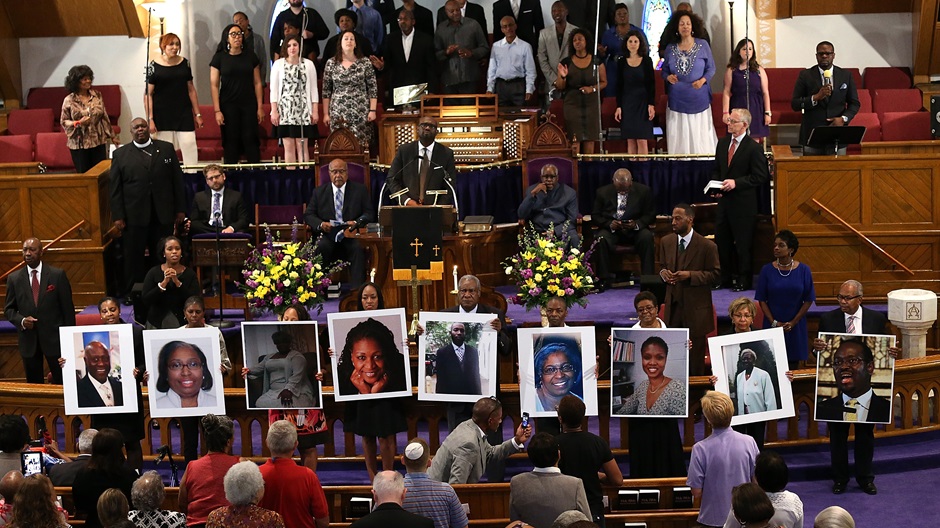
The Difference Maker In the Charleston Shooting

Image processed by CodeCarvings Piczard ### FREE Community Edition ### on 2015-06-24 19:28:31Z | http://piczard.com | http://codecarvings.com

Vigil Held For Victims Of Charleston Church Shooting

The recent shooting in Charleston is a continuation of the seeming explosion of racial tension in this country, but there is a crucial difference. It is hard to imagine that we could endure another tragedy with racial overtones following the Trayvon Martin case, police shootings, rioting and other examples that racial wounds have not yet healed, but the shooting at the Emanuel AME Church shows us there is hope. Continue reading

From Across the Dressing Room A Different Story May be Emerging

canstockphoto12364737


I am not sure why I am entering into the transgender discussion. I do not want to be seen as phobic, unloving or not accepting of people with differences. We all have our issues, and we all have choices to make. The freedoms that protect me and my choices should be extended to others to make their own choices – as long as they are not hurting other people. Right? Continue reading


“Taste and see that the Lord is good.” (Psalm 34:8)

The Gospels and the epistles that make up the canonized New Testament are written as historical documents. They purport to record historical events, and the things that Jesus says are recorded in the context of a chronology of events. That means the claims of the New Testament are falsifiable. Continue reading

The Gospel Can Be Tested